Blow-in Insulation Brisbane
Blow-in insulation in Brisbane is the practical answer for low-pitched roofs, tight eave edges and awkward ceilings where batts are hard to fit. Insulation Extract removes old cellulose "fluff" and replaces it with Knauf glasswool blow-in insulation, which is non-combustible to AS1530.1.
Extraction & Batts
Get your free quote
This secure form sends your enquiry to our technical team, and we'll be in contact with you shortly.
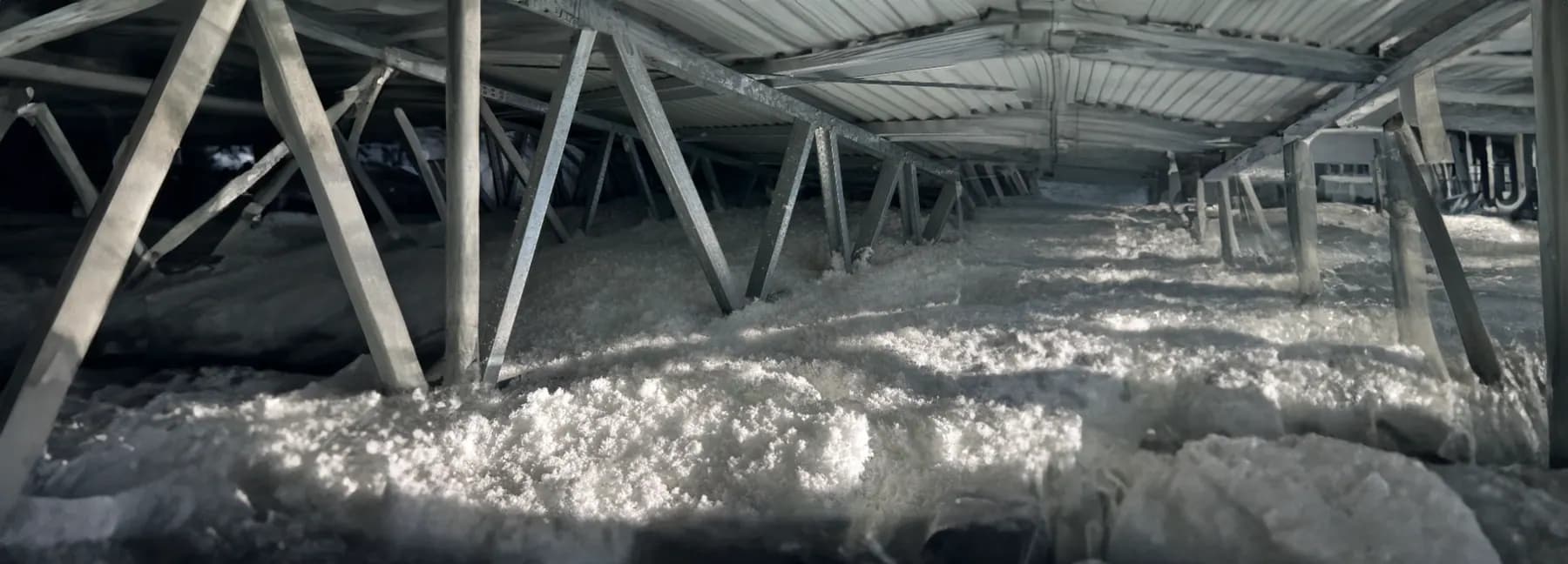
Blow-in, also called loose-fill, is made up of small fibres that are blown through a hose into the roof space. They settle into a continuous blanket that wraps around joists, wiring and obstacles. When it is the right material, installed to the right depth, it is a very effective way to insulate the hard-to-reach parts of a Brisbane roof.
Two very different kinds of blow-in insulation
The old "fluff"
Many South East Queensland ceilings still contain older loose-fill, often a cellulose product made from shredded paper treated with chemicals. A lot of it was installed decades ago, and plenty more went into Australian roofs during the federal Home Insulation Program around 2009 and 2010. Over time this material tends to settle, leaving thin patches and bare areas. It can absorb moisture from roof leaks, turn dusty and hold odours from pests.
Modern glasswool blow-in
Today we install Knauf glasswool blow-in insulation. It is non-combustible to AS1530.1, does not rely on paper or organic fibres and is designed to give consistent thermal performance when blown to the correct depth. It is a completely different product from the old fluff, even though it is installed in a similar way.
Why blow-in suits so many Brisbane roofs
Low-pitched brick and tile homes
Low-set brick homes built across Brisbane from the 1970s onwards often have shallow roof pitches. Near the eaves there may be only a small gap between the ceiling and the roof, which is difficult to reach with batts. Blow-in can be directed into these edges from further inside the roof space, completing coverage where heat gain is often worst.
Ceilings full of obstacles
Air-conditioning ducts, solar cabling, data cables and old wiring are common in SEQ roof spaces. Loose-fill flows around them rather than leaving the gaps that cut batts can.
Hot roofs, continuous cover
In Brisbane's climate zone 2, heat flows down from the roof for much of the year. Any uninsulated strip or gap lets heat through. Blow-in helps close those gaps so the ceiling has an unbroken layer of insulation.
Insulation works best alongside the rest of the roof. Reflective sarking under the tiles or roof sheets and good roof ventilation, such as whirlybirds or vented eaves, help reduce how hot the roof space gets in the first place. A continuous layer of blow-in or batts on the ceiling then slows whatever heat remains.
Blow-in or batts: which is better for your home?
Both have their place, and many Brisbane jobs use a mix.
- Knauf Earthwool® batts are ideal where there is good roof access and enough height to lay them neatly. They come with a 50-year manufacturer warranty and are made with up to 80% recycled glass and ECOSE® Technology, a bio-based binder with no added formaldehyde.
- Glasswool blow-in is ideal for low clearances, tight edges, irregular joist layouts and ceilings packed with services.
- A combination often gives the best result: batts across the open areas and blow-in into the tight spots near the eaves.
During your free assessment we look at the roof pitch, access and obstacles and recommend the mix that gives the most even coverage.
Removing old blow-in insulation first
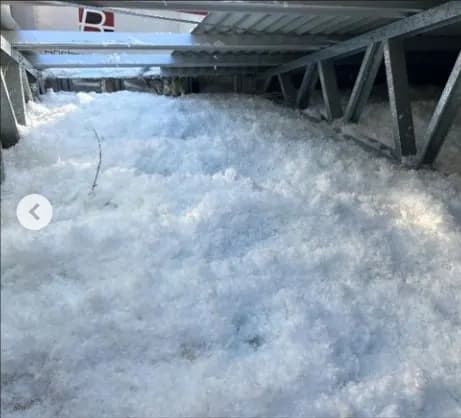
Laying new insulation on top of settled, dusty or contaminated fluff is rarely a good idea. Old loose-fill can hide pest droppings, damp patches and wiring problems, and it makes it harder to check that the new insulation is even.
We remove old loose-fill with a 25HP negative-pressure vacuum that draws it straight into sealed truck hoppers. Hoses run into the roof space, so the material never comes through your home and there is no interior dust when the job is set up correctly. Once the cavity is clean, the new insulation goes in.
In homes built before 1990, old insulation should be checked before removal. If anything suspicious is found, we stop and recommend testing by a licensed professional.
Blow-in insulation for walls
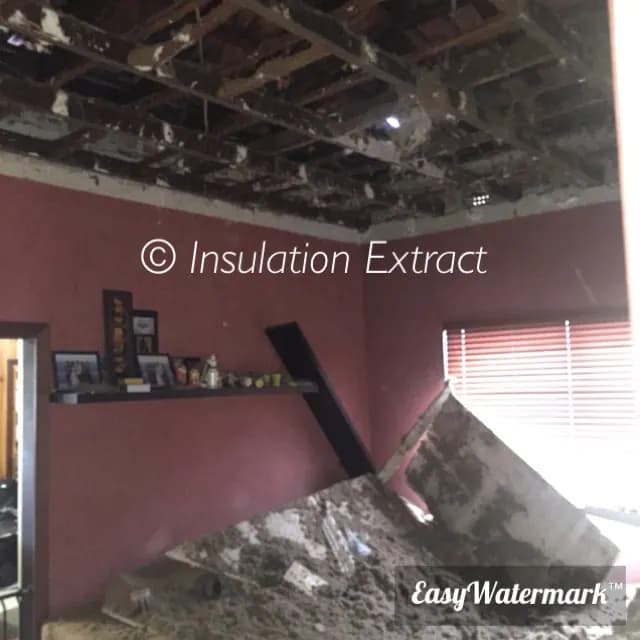
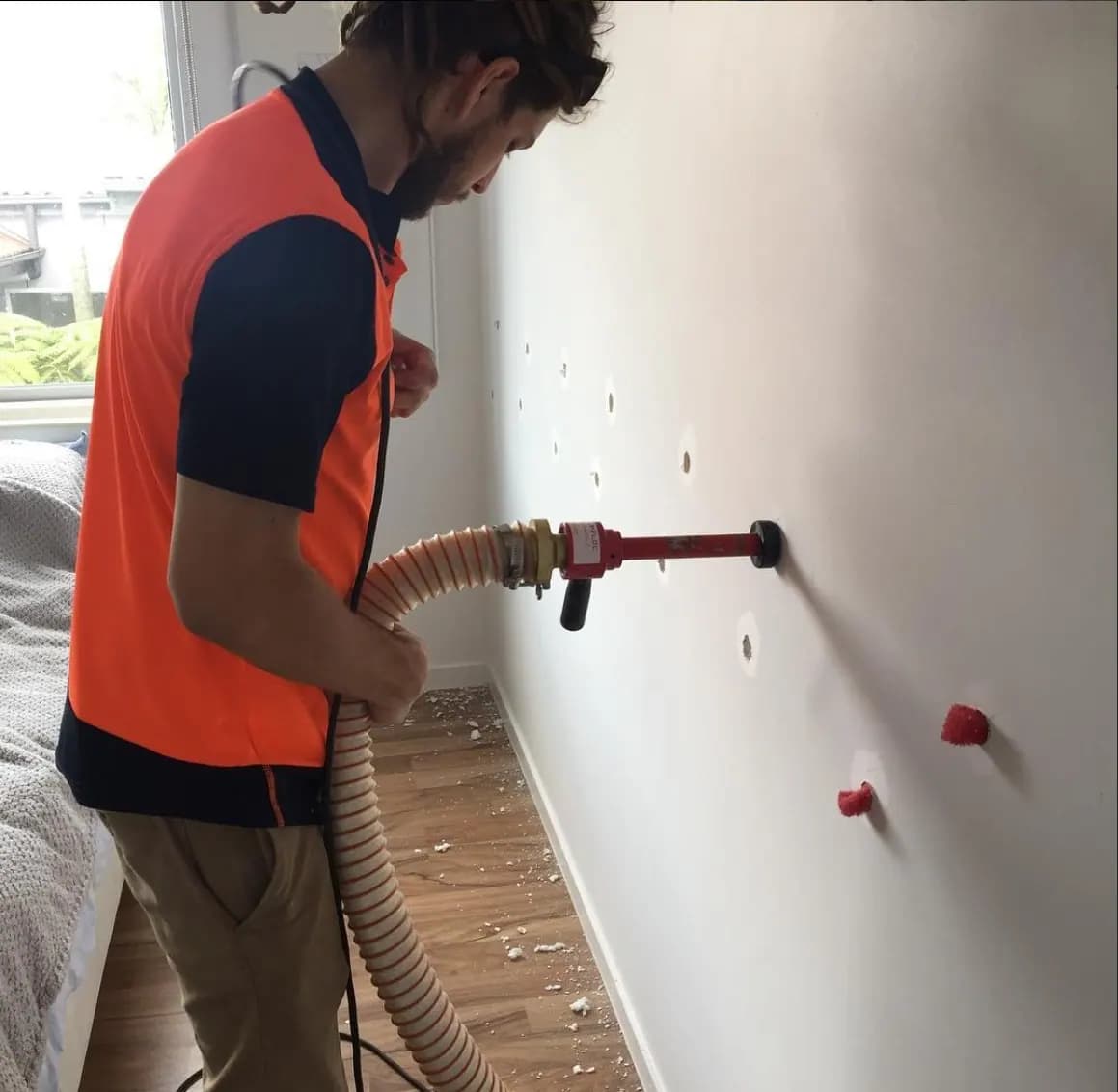
Blown glasswool is also used for walls. Knauf Supafil is designed to be injected into wall cavities in suitable masonry construction, which can make a real difference on west-facing walls that bake in the afternoon sun. Suitability depends on how your walls are built, so we check the construction during the assessment and explain the options.
Our blow-in insulation process
- 1
Free assessment
We inspect your roof space, measure access and clearances, identify existing insulation and check for hazards such as damaged wiring, moisture or pests.
- 2
Removal where needed
Old fluff, dust and debris are vacuumed out into sealed hoppers.
- 3
Preparation
We set clearances around downlights, exhaust fans, flues and other heat-producing fittings, and protect manholes and access points.
- 4
Blowing in
The glasswool is blown evenly across the ceiling to the depth needed for the agreed R-value, paying close attention to edges and corners.
- 5
Quality check
We check depth and coverage across the roof and show you the result.
Blow-in insulation across Brisbane and South East Queensland
From our branch at Hemmant, we install blow-in insulation across Greater Brisbane, Moreton Bay, Logan, the Redland Coast, the Gold Coast, the Sunshine Coast, Ipswich and Toowoomba. Insulation Extract has been operating since 2014 and has retrofitted more than 45,000 Australian homes. Call (07) 3088 6933 to book your free assessment.