Blow-in Insulation Sydney
Blow-in insulation in Sydney covers two jobs: getting rid of the old paper-based loose-fill that many homes still have, and installing modern glasswool blow-in where batts are hard to fit. Insulation Extract handles both, from low-pitched terrace roofs in the inner city to brick veneer homes in Western Sydney.
Extraction & Batts
Get your free quote
This secure form sends your enquiry to our technical team, and we'll be in contact with you shortly.
Old blow-in versus modern blow-in
The phrase blow-in insulation means very different things depending on when it went in. Knowing which one you have is the first step.
The old loose-fill in many Sydney roofs
Older loose-fill, often called cellulose or simply the fluff, was usually made from shredded newspaper treated with chemicals. Over the years it settles, leaving thin patches and bare ceiling, and it can hold moisture after a roof leak. It also creates a lot of dust, which can find its way through downlights and vents.
In NSW there is an extra reason to be careful with old loose-fill. Some homes in Canberra and parts of NSW had loose-fill asbestos, sold under names such as Mr Fluffy, blown into their roofs between the late 1960s and 1980s. If your home was built before 1990 and has loose-fill, check the NSW Loose-Fill Asbestos Insulation Register and have the material assessed before it is disturbed. Insulation Extract does not remove or vacuum asbestos.
Modern glasswool blow-in
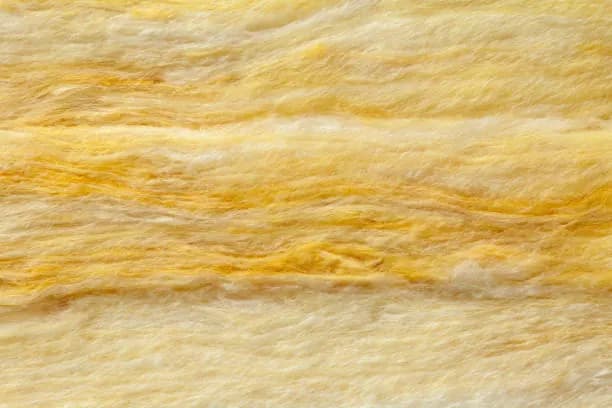
Today's blow-in is a glasswool product designed to be installed by trained crews with specialised equipment. It fills around obstacles and into corners, forming a continuous layer without the gaps that can occur between cut batts. Glasswool blow-in is non-combustible to AS1530.1, does not rot and holds its loft far better than old cellulose.
Signs your roof has old loose-fill
If you see any of these, do not climb in and start pulling the material out yourself. Book an assessment so it can be identified safely first.
- A grey or brown fluffy layer instead of batts when you look through the manhole
- Fine dust settling around downlights, vents and cornices
- Thin patches where the ceiling plaster shows through
- Stained or sagging ceilings below areas that have been wet
Where blow-in works best in Sydney homes
Earthwool batts are our first choice for most open roof spaces. Blow-in comes into its own where access is limited or the roof shape makes batts awkward, which is common in Sydney's older and inner-city housing:
- Terrace houses in Paddington, Surry Hills, Redfern, Glebe, Balmain and Newtown, where roof spaces are low, narrow and split by party walls
- Low-pitched roofs on post-war cottages and fibro homes across the south west and the Illawarra
- Rear additions and lean-tos with shallow ceiling spaces that are hard to crawl into
- Roof edges near the eaves, where there is too little height to lay batts properly
- Ceilings with lots of framing, ducting or services that make cutting batts slow and gappy
In many jobs the best result is a mix: batts across the open part of the roof and blow-in for the tight sections.
Two-storey homes are another common case. The ceiling space over a single-storey section, such as a garage or rear family room, is often too shallow to crawl through, but blow-in can be placed into it from an accessible point. That helps rooms that otherwise sit directly under a hot roof with very little protection.
Our blow-in process
- 1
Assessment
We look at the roof structure, the existing material and how much clearance there is. If old loose-fill is present, we inspect it first and confirm it is safe to remove.
- 2
Removal of old loose-fill
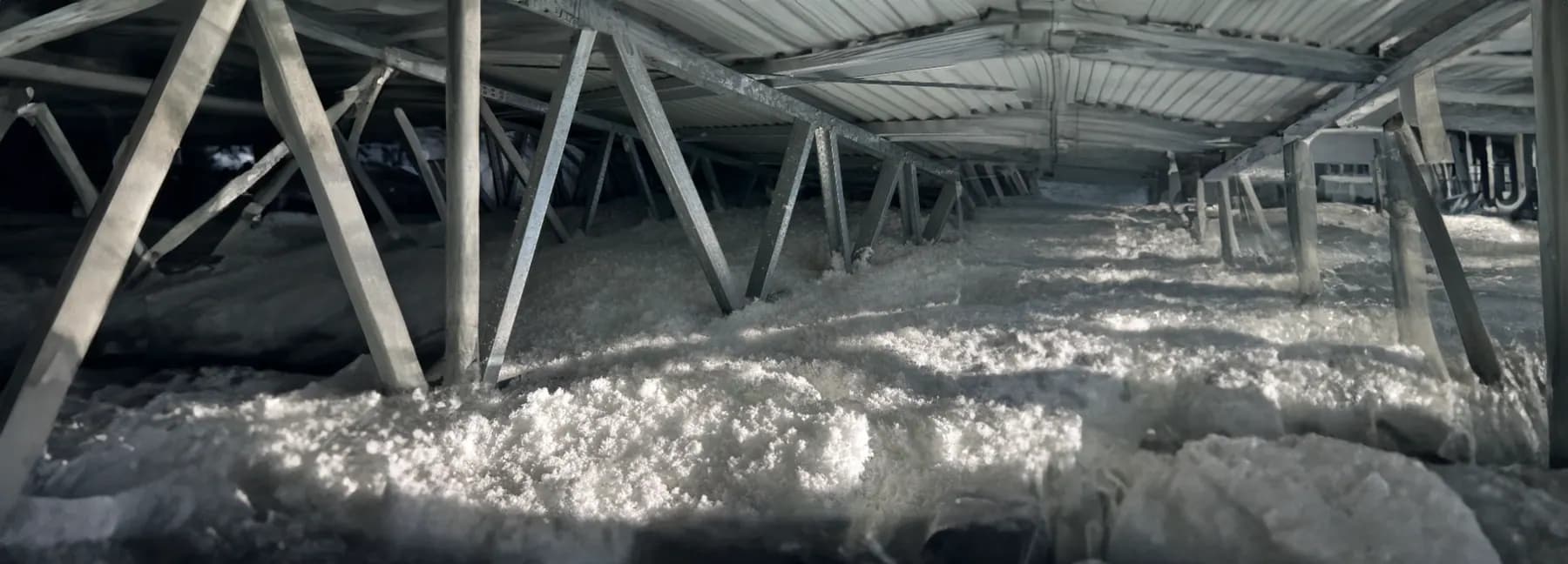
Old cellulose is extracted with our 25HP negative-pressure vacuum, straight into a sealed truck hopper, so it does not come through your home. The ceiling is vacuumed clean once the bulk is out.
- 3
Installing new insulation
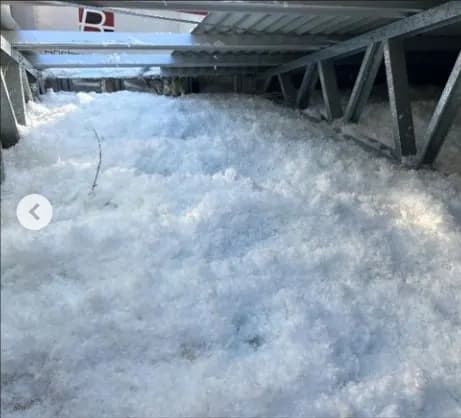
New glasswool blow-in is blown to an even depth across the area, with clearances kept around downlights and other heat sources. Where batts suit the open parts of the roof, we install Knauf Earthwool® batts alongside it.
- 4
Final check
The crew checks coverage across the whole ceiling, including corners and edges, so there are no thin spots left behind.
Blow-in and noise
A full, even layer of glasswool also helps with sound. In inner-city terraces and homes under flight paths in the Inner West and South West, filling the ceiling properly can take some of the edge off rain on a metal roof, traffic and aircraft noise.
Choosing the right R-value for Sydney
Coastal and central Sydney is mostly in NCC climate zone 5, while much of western Sydney is in zone 6, where cooler winters mean a higher R-value pays off. A home in Manly mostly needs protection from summer heat in the roof; a home in Penrith or Camden needs that and help through frosty winter nights. We recommend a depth and R-value to suit your area and your roof after the assessment.
Blow-in insulation across Greater Sydney
Our NSW team works from Unit 4/1 Powdrill Rd, Prestons, and covers the Inner West, Eastern Suburbs, North Shore, Northern Beaches, Hills District, Western Sydney, South West Sydney including Liverpool and Campbelltown, the Sutherland Shire, the Central Coast and Wollongong.
Insulation Extract has been operating since 2014, is part of the Energy Efficiency Group (EEG), holds ISO 9001, 45001 and 14001 certified systems and has retrofitted more than 45,000 Australian homes. Book a free assessment through the quote form or call (02) 7233 1266.