Blow-in Insulation Melbourne
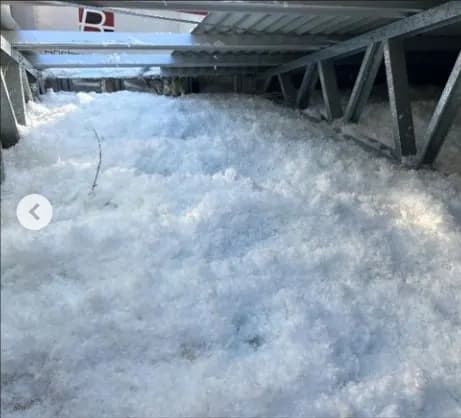
Blow-in insulation in Melbourne is the practical answer for roof spaces that are too low, tight or awkward for batts. We blow non-combustible glasswool through a hose to form an even, seamless blanket across the ceiling, reaching corners and eaves that a person cannot crawl into.
Extraction & Batts
Get your free quote
This secure form sends your enquiry to our technical team, and we'll be in contact with you shortly.
What is blow-in insulation?
Blow-in insulation, also called loose-fill insulation, is made of small pieces of insulation material blown into place through a hose. Instead of fitting batts one by one, the installer builds up an even layer to a set depth, which determines the R-value.
Older forms of loose-fill gave the method a poor reputation. Shredded paper cellulose, rockwool and wool products used in past decades were prone to settling, absorbing moisture and harbouring dust. Modern blown glasswool is a different product. It is non-combustible to AS1530.1, made with recycled glass, contains no added formaldehyde and is designed to hold its depth.
Melbourne homes that suit blow-in insulation
Batts are a great product when there is room to work. Many Melbourne homes do not offer that. Blow-in insulation is often the best option for:
- Interwar Californian bungalows and post-war homes with low-pitched roofs, where the space near the eaves is only centimetres high
- 1960s and 1970s brick veneer and mid-century homes with flat or very shallow roofs
- Skillion and low-slope extensions at the back of Victorian and Edwardian homes
- Roof spaces cluttered with ducting, trusses and bracing that make batt fitting slow and patchy
- Townhouses and units where roof access is limited to a small hatch
In these homes, crawling to the far edges with batts is either unsafe or impossible. A hose can reach those areas with minimal disturbance.
Why blow-in insulation works in Melbourne's climate
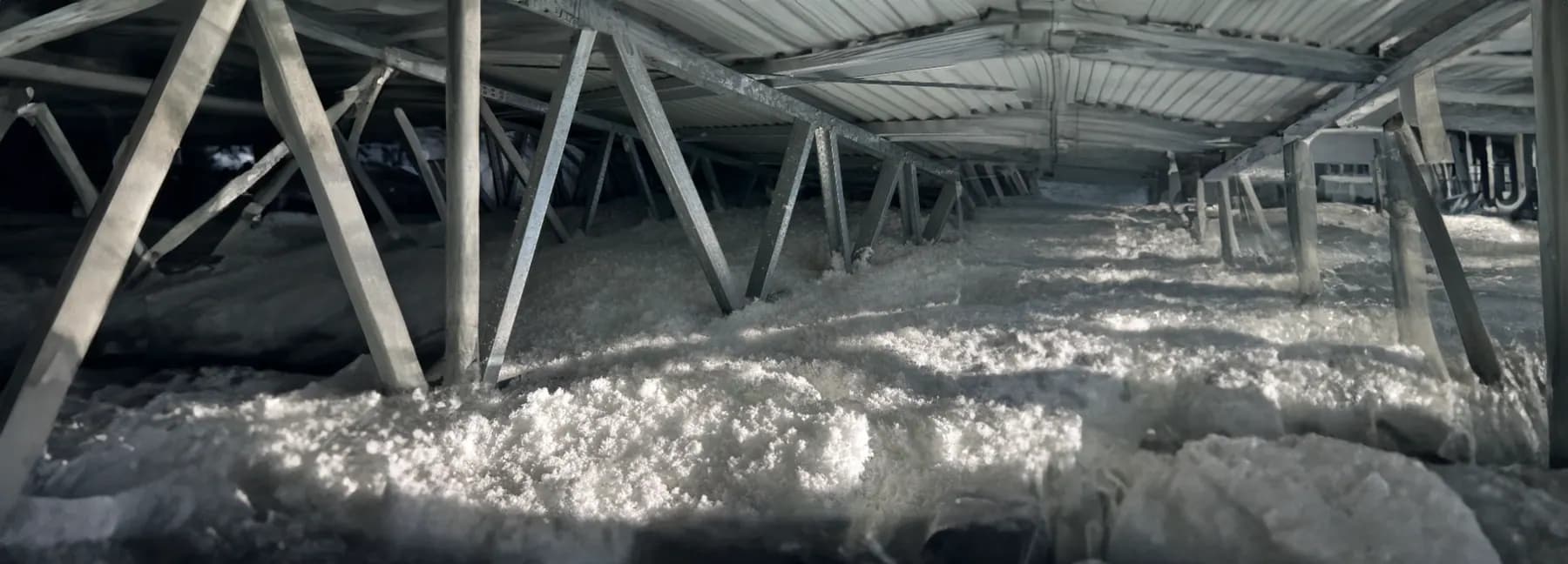
Melbourne is in climate zone 6, and cold winters make complete ceiling coverage especially important. The outer edges of a ceiling above external walls are often the coldest spots in a home, and they are exactly where batts are most likely to be missing in a low roof. Blown glasswool fills those edges and the gaps around joists and fittings, creating a continuous layer with fewer weak points for heat to escape.
The same applies on the hot northerly days Melbourne gets each summer. A low roof heats up fast, and an even blanket of insulation right to the edges slows that heat moving down into the rooms below.
Key benefits
- Seamless coverage that fills gaps, corners and irregular spaces
- Non-combustible glasswool to AS1530.1
- Made with recycled glass and no added formaldehyde
- Resistant to moisture and does not support mould growth when kept dry
- Helps reduce noise from rain on the roof, traffic and aircraft
- Fast installation, usually with less time spent in the roof space
Replacing old loose-fill insulation
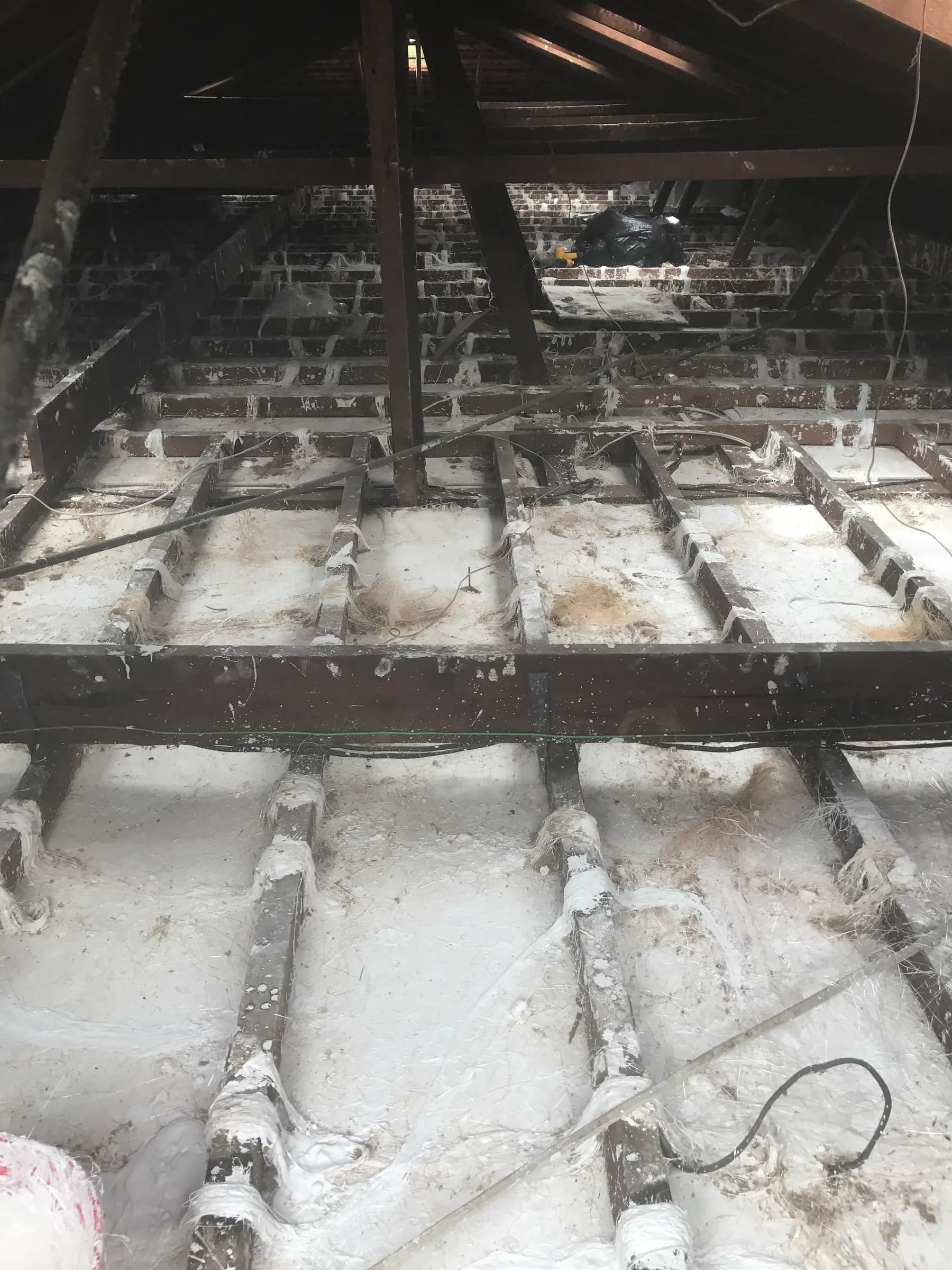
Some Melbourne homes already have an old loose-fill product in the ceiling that has settled, gone dusty or been disturbed by pests. In most cases the right approach is to remove it first with our 25HP negative-pressure vacuum, which sends it directly into sealed truck hoppers, and then blow in fresh glasswool to the correct depth. If your home was built before 1990, we check the existing material before it is disturbed.

How we install blow-in insulation
- 1
Assessment and preparation
During a free on-site visit we check the roof structure, ventilation, existing insulation and any downlights or flues that need clearance. Light fittings and exhaust fans are guarded so insulation stays clear of them.
- 2
Blowing the insulation
The blowing machine stays outside or in the truck, and a hose is fed into the roof space. The installer works from the access point outwards, directing the material evenly into every bay.
- 3
Checking depth and coverage
Depth markers are used across the ceiling so the finished layer reaches the specified thickness for the R-value agreed in your quote.
Ventilation, downlights and safety in the roof space
A good blow-in job is about more than depth. Before we start, we make sure the insulation will stay where it belongs and not create new problems:
- Older downlights, transformers and exhaust fans are guarded so insulation keeps the required clearance
- Flues from gas heaters and other appliances are kept clear
- Eave and roof vents are not blocked, so the roof space can still breathe
- Electrical cables are checked for obvious damage before they are covered
- Access hatches are dammed so loose material does not spill when they are opened
These steps matter in older Melbourne homes, where roof spaces often contain a mix of original wiring, newer downlights and ducted heating.
Blow-in or batts?
Neither product is always better. Batts suit open roof spaces with good height and access, and they are easy to inspect and lift later. Blow-in suits low, tight or cluttered spaces where complete coverage would otherwise be hard to achieve. Some Melbourne homes get a combination: batts in the open middle of the roof and blown glasswool along the edges. We will recommend what suits your roof after inspecting it.
Blow-in insulation across Melbourne, Geelong and the Mornington Peninsula
Our Melbourne team works from the Dandenong South and Campbellfield hubs and covers the inner city, the northern suburbs including Preston, Brunswick and Whittlesea, the eastern and south-eastern suburbs including Bayside and Monash, the western suburbs including Werribee, Sunshine and Point Cook, plus Geelong, the Mornington Peninsula and the Yarra Ranges.
Insulation Extract has retrofitted more than 45,000 Australian homes since 2014, operates ISO 9001, 45001 and 14001 certified systems and is EEC certified. Call (03) 7009 1718 to arrange your free assessment.