Spray Foam Insulation Melbourne
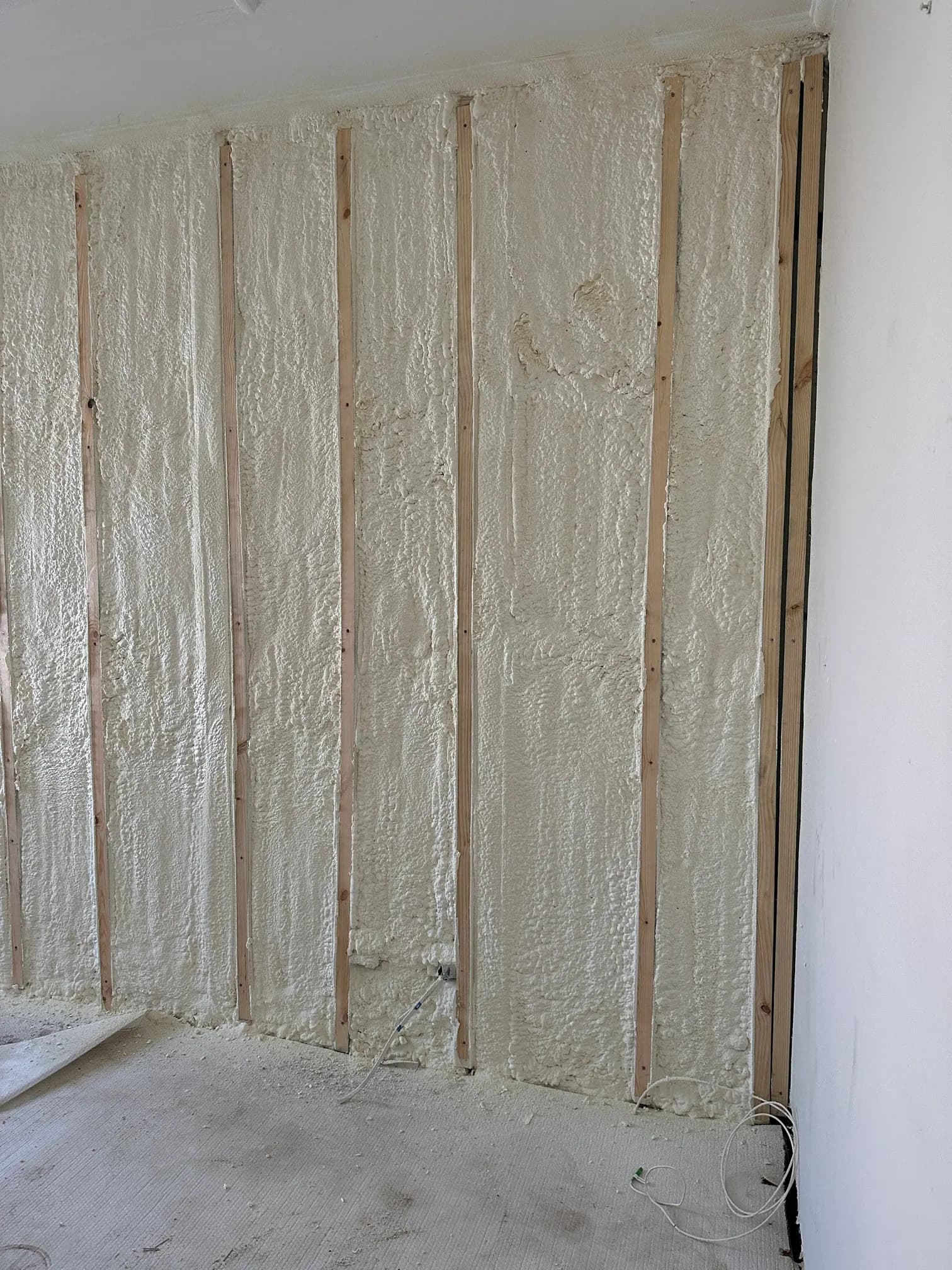
Spray foam insulation in Melbourne insulates and air-seals in one step, making it a strong choice for draughty older homes. We apply polyurethane foam to subfloors, walls, raked ceilings and other areas where batts struggle to deliver a tight, continuous result.

Extraction & Batts
Get your free quote
This secure form sends your enquiry to our technical team, and we'll be in contact with you shortly.
What is spray foam insulation?
Spray foam is applied as a liquid that expands within seconds and sets into a solid foam. Because it bonds directly to timber, brick and other surfaces, it fills cracks, joins and irregular shapes completely, leaving no gaps for air to sneak through.
Closed-cell and open-cell foam
- Closed-cell foam is dense and rigid. It provides about R1.0 for every 20mm of thickness, resists moisture and adds stiffness to the surfaces it bonds to. It is our usual choice for subfloors and areas exposed to damp.
- Open-cell foam is softer and lighter. It expands further, is useful for filling larger cavities and is good at absorbing sound, but it needs more thickness to reach the same R-value and is better suited to dry, protected spaces.
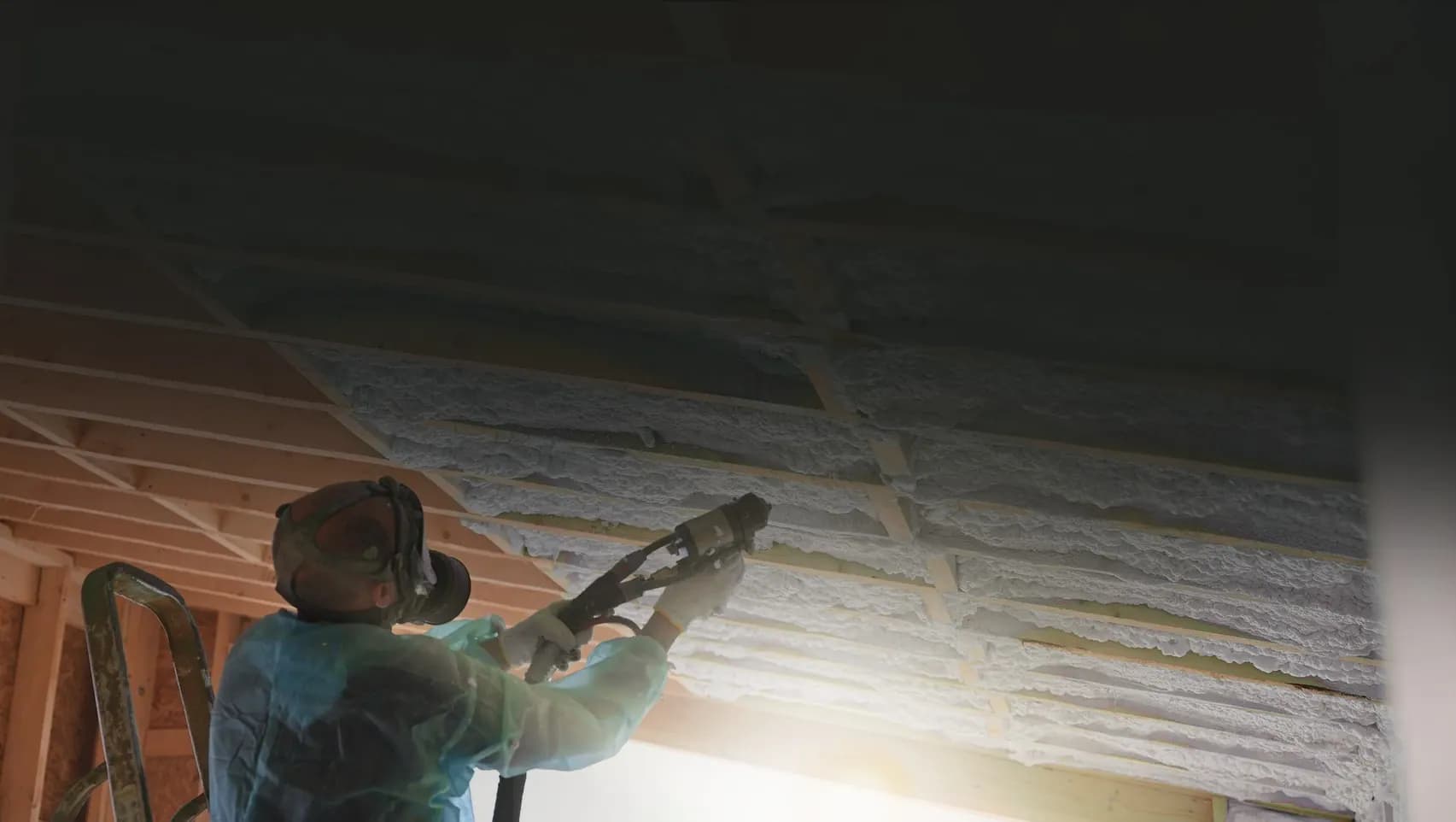
Why spray foam suits so many Melbourne homes
Melbourne's older housing stock is famously draughty. Gaps between floorboards, joins between old and new sections of a house, and uneven framing in Victorian and Edwardian homes all let cold air in. In climate zone 6, where winters are long and heating does most of the work, air leakage can undo much of the benefit of conventional insulation.
Spray foam tackles both problems at once. It slows heat transfer like any insulation, and because it seals as it goes, it also stops the uncontrolled airflow that makes rooms feel cold even when the heater is on.
Where we use spray foam in Melbourne homes
Under timber floors
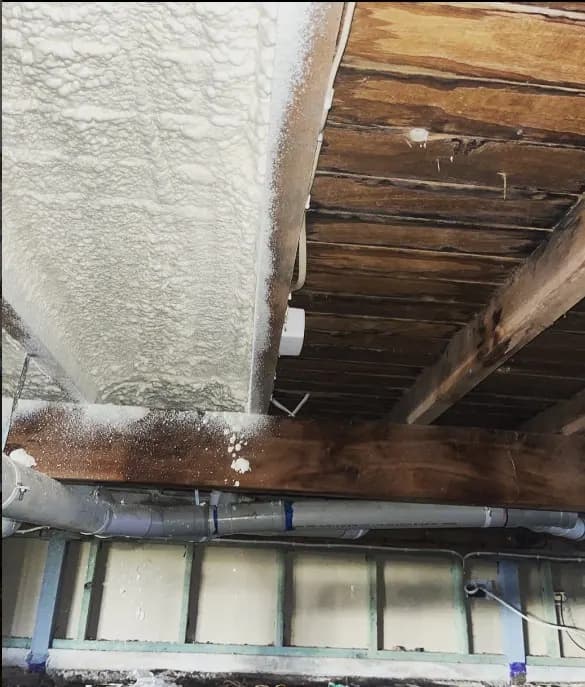
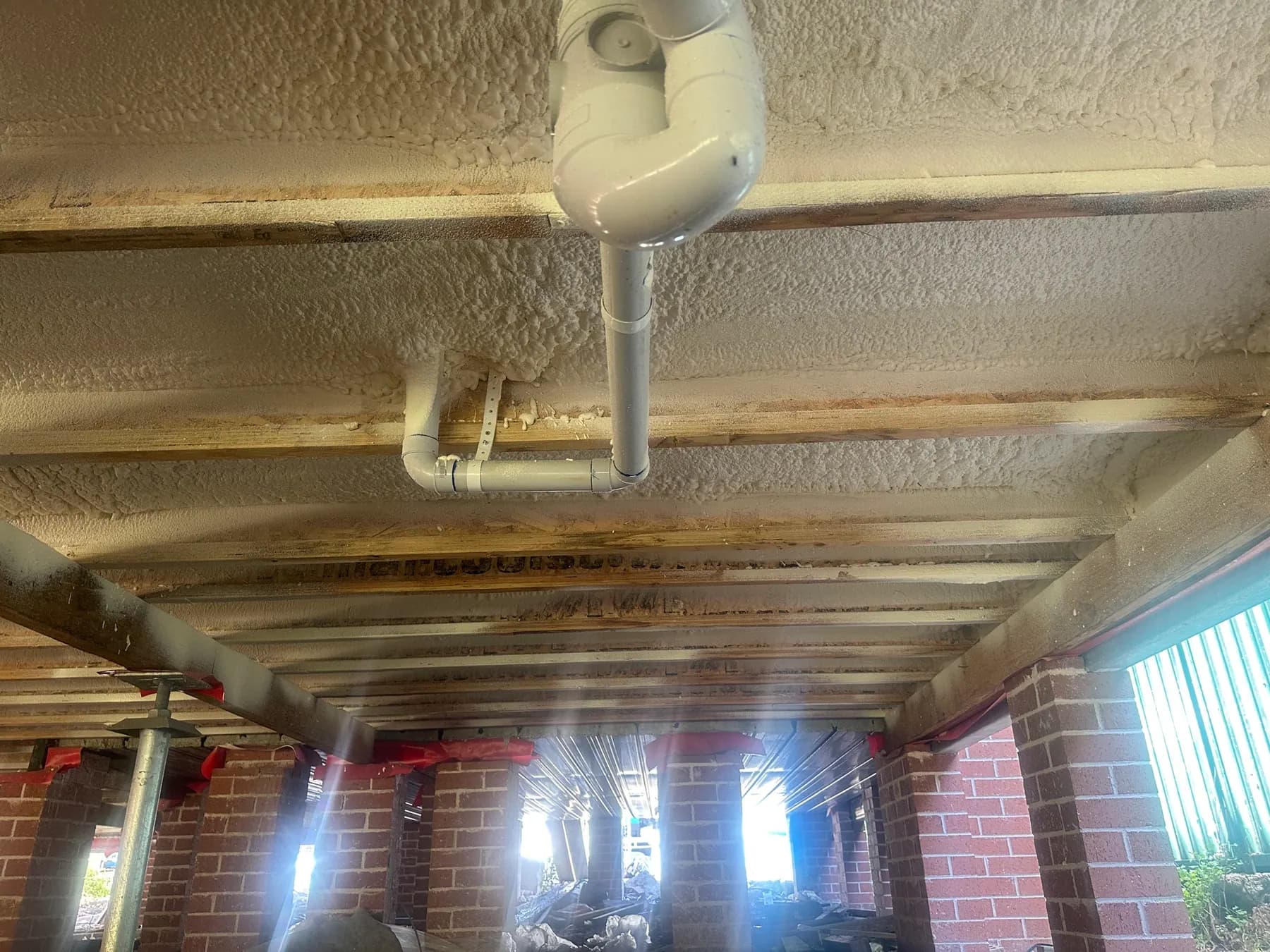
Many Melbourne homes sit on stumps with ventilated subfloors. Closed-cell foam sprayed under the boards seals gaps that let cold air rise into the room and insulates the floor in one application. It works well in tight or irregular subfloors where batts are hard to fit.
Walls during renovations
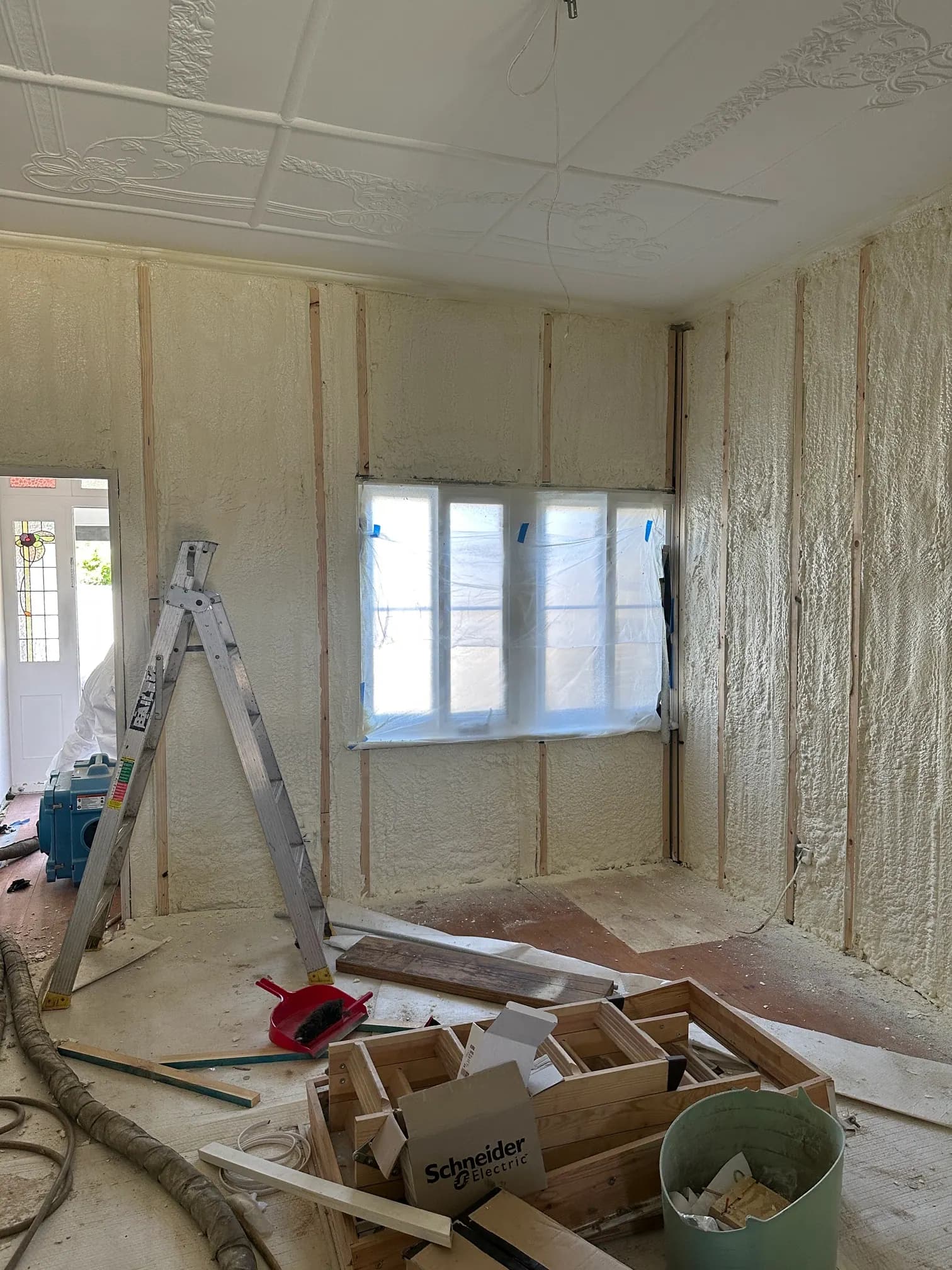
When walls are opened up during a renovation or extension, spray foam can be applied to the stud cavities before new linings go on, creating a well-sealed, insulated wall.
Raked, cathedral and skillion ceilings
Rear extensions on Melbourne period homes often have raked or skillion ceilings with little or no roof space. Spray foam applied to the underside of the roof during building or renovation work insulates these spaces where batts may not fit well.
Garages, studios and spaces below living areas
Rooms built above garages and home studios or workshops in the backyard benefit from the combined insulation and air sealing that spray foam provides.
Benefits of spray foam insulation
- Insulates and air-seals in one step
- Fills irregular gaps, corners and joins completely
- Closed-cell foam resists moisture and does not provide food for mould
- Does not sag or slump over time like loose products can
- Adds rigidity to the surfaces it is applied to
- Reduces noise from outside and between rooms
- Helps keep warmth inside during Melbourne's cold, windy winters
Is spray foam right for you?
Spray foam is not always the cheapest option, and it is not the right answer for every part of a home. For an accessible roof space with good height, Knauf Earthwool® batts are usually the more practical and cost-effective choice. Spray foam earns its place where airtightness matters, where the space is awkward, or where moisture is a concern. Because it bonds permanently, it also needs care around wiring and plumbing, which we plan for during the assessment.
We will recommend spray foam only where it makes sense and explain the alternatives. In many Melbourne homes the answer is spray foam in one area, such as a draughty subfloor, and batts or blown glasswool elsewhere.
Spray foam alongside other insulation
Most Melbourne homes get the best result from a mix of products. A typical upgrade might combine Earthwool batts in an accessible roof space, closed-cell spray foam under a draughty timber floor and injected glasswool in brick veneer walls. Each product goes where it performs best, and together they wrap the home in a more complete thermal envelope.
Because we install batts, blow-in, cavity wall and spray foam insulation, we can look at the whole house during one free assessment rather than pushing a single product. That means you get a plan that matches your home's construction, your budget and the parts of the house that feel coldest.
Our spray foam installation process
- 1
Free on-site assessment
We inspect the area, check access, moisture, services and ventilation, and recommend a foam type and thickness.
- 2
Preparation
Surrounding areas, fittings and vents are masked off. Subfloor vents stay clear so the space can continue to breathe.
- 3
Application
Trained installers in full protective equipment apply the foam in passes to reach the required thickness.
- 4
Curing and clean-up
The foam cures quickly. We trim and tidy as required, remove waste and walk you through the finished work.
Spray foam insulation across Greater Melbourne
From our Dandenong South and Campbellfield hubs we cover inner Melbourne, the northern suburbs including Preston, Brunswick and Whittlesea, the eastern and south-eastern suburbs including Bayside and Monash, the western suburbs including Werribee, Sunshine and Point Cook, plus Geelong, the Mornington Peninsula and the Yarra Ranges.
Insulation Extract has retrofitted more than 45,000 Australian homes since 2014 and operates ISO 9001, 45001 and 14001 certified systems. Call (03) 7009 1718 to book a free spray foam assessment.