Underfloor Insulation Melbourne
Underfloor insulation in Melbourne stops the cold that rises through timber floorboards every winter. We insulate beneath suspended floors with Knauf Earthwool® underfloor batts or closed-cell spray foam, cutting draughts and keeping heat inside where it belongs.
Extraction & Batts
Get your free quote
This secure form sends your enquiry to our technical team, and we'll be in contact with you shortly.
Why Melbourne timber floors feel so cold
A large number of Melbourne homes sit on stumps with a ventilated subfloor beneath timber boards. That includes Victorian and Edwardian weatherboards, interwar Californian bungalows, and many post-war brick veneer homes. The subfloor needs ventilation to stay dry, but that means cold winter air moves freely under the house.
Without insulation, the only thing between that cold air and your living room is a layer of floorboards. Heat escapes downward through the boards, and gaps between older boards let cold draughts straight into the room. On a still winter morning you can often feel the difference standing barefoot on an uninsulated floor compared with a rug.
In climate zone 6, where heating is needed for months each year, subfloor heat loss is one of the most common reasons a Melbourne home still feels cold after the ceiling has been insulated.
Our underfloor insulation options
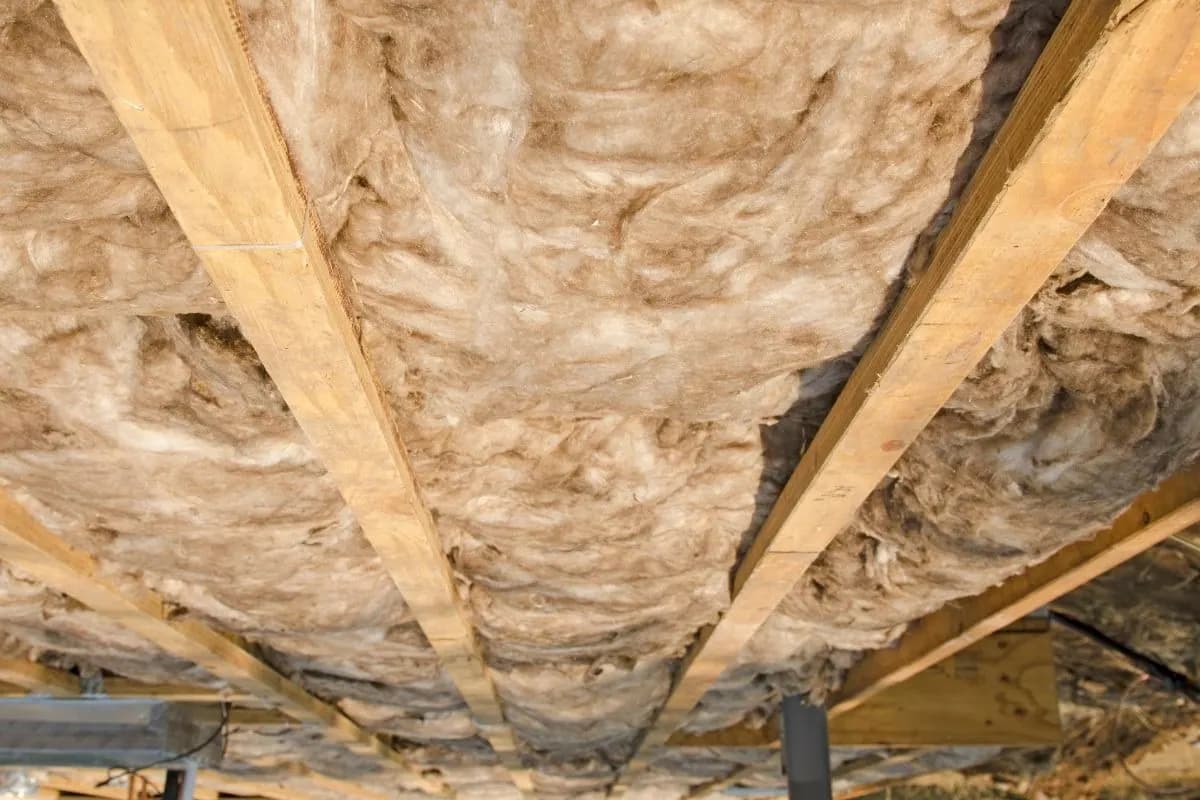
Knauf Earthwool® underfloor batts
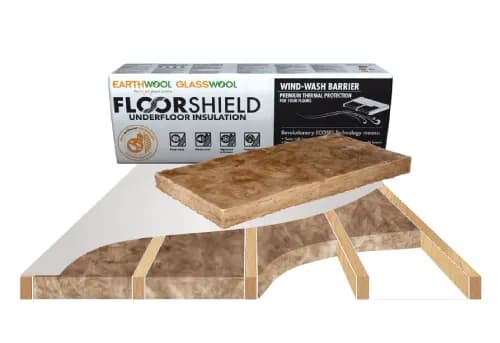
Glasswool batts are fitted snugly between the floor joists and held in place so they stay tight to the underside of the boards. Products such as Earthwool FloorShield include a wind-wash barrier facing the subfloor, which helps stop moving air stripping heat from the batt. Batts are a cost-effective choice for open subfloors with good access and regular joist spacing.
- ECOSE® Technology binder with no added formaldehyde
- Made with up to 80% recycled glass
- Non-combustible to AS1530.1
- Backed by a 50-year manufacturer warranty
Closed-cell spray foam
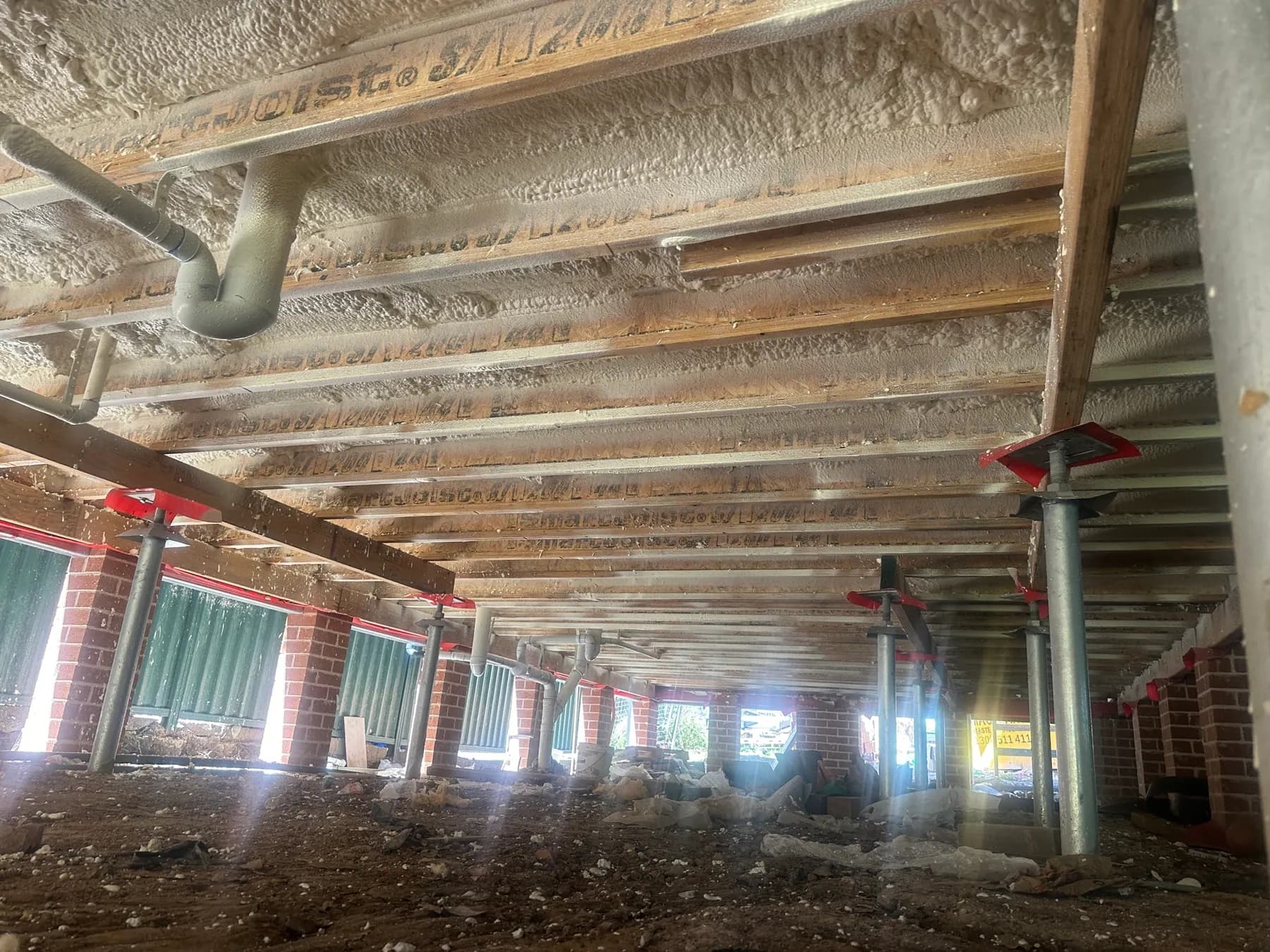
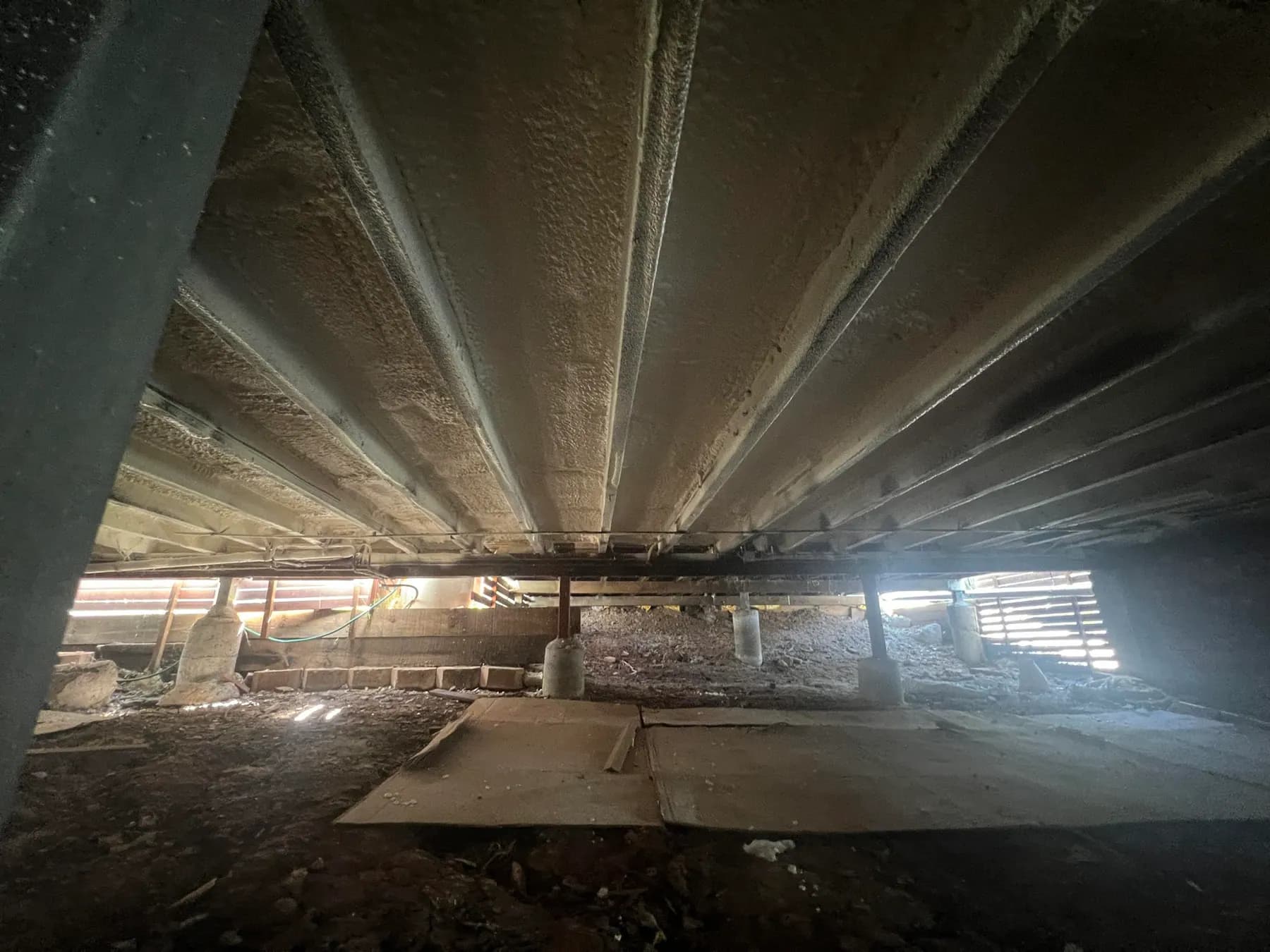
Closed-cell polyurethane foam is sprayed directly onto the underside of the floorboards and joists, where it expands and sets into a rigid, airtight layer. It seals the gaps between boards that cause draughts, adds some rigidity, resists moisture and suits uneven or awkward subfloors where batts are hard to fit.
Batts or spray foam?
Batts usually suit straightforward subfloors with decent clearance and the main goal of reducing heat loss. Spray foam suits homes where draughts through gappy boards are the main complaint, where the subfloor is tight or irregular, or where a more airtight result is wanted. We will recommend an option after inspecting your subfloor.
What we need to install underfloor insulation
To work safely and do a proper job, our installers need to get under the house. Generally we look for:
- A suspended timber floor rather than a concrete slab
- A subfloor access point, such as a hatch or an opening in the base brickwork
- Enough crawl space to move and work, typically around 600mm or more
- Reasonable access throughout the subfloor, without large sections closed off
- A dry subfloor with no active leaks or drainage problems
We also keep subfloor vents clear. Ventilation under Melbourne homes helps control moisture, so insulation is fitted to the floor, not used to block vents.
Common subfloor issues in older Melbourne homes
Older houses often have more going on under the floor than people expect. During our free assessment we look for and report on:
- Damp soil, poor drainage or blocked vents that need attention first
- Old plumbing, gas lines and cabling attached to joists
- Low spots and areas too tight to access safely
- Signs of pests or rot in stumps, bearers and joists
- Building rubble or old materials left under the house, which in pre-1990 homes should be checked before being disturbed
What to expect on installation day
Underfloor installs happen almost entirely beneath the house, so there is very little disruption inside. Our crew enters through the subfloor access, checks clearances again and lays out the work. For batts, each bay between the joists is measured and filled, and the batts are supported so they stay tight against the boards. For spray foam, vents and services are masked off and the foam is applied in passes to the required thickness.
We remove offcuts and packaging from under the house and finish with photos of the completed subfloor so you can see the coverage. Most Melbourne homes are completed in a single day.
Making the most of underfloor insulation
Underfloor insulation works best as part of a complete approach. If the ceiling above is uninsulated, heat saved through the floor can still escape through the roof, so we always check the ceiling during the same visit. Sealing gaps around skirting boards, old fireplaces and wall vents also helps stop draughts in older homes.
Benefits of insulating under the floor
- Warmer floors and rooms through the Melbourne winter
- Fewer draughts through gaps between floorboards
- Less work for your heating system and more even temperatures
- Reduced noise travelling up from the subfloor
- Complements ceiling and wall insulation for a more complete thermal envelope
Underfloor insulation across Melbourne and regional Victoria
Our crews operate from the Dandenong South and Campbellfield hubs and cover the inner city, the northern suburbs including Preston, Brunswick and Whittlesea, the eastern and south-eastern suburbs including Bayside and Monash, and the western suburbs including Werribee, Sunshine and Point Cook. We also service Geelong, the Mornington Peninsula and the Yarra Ranges, where older timber homes on stumps are common.
Insulation Extract has retrofitted more than 45,000 Australian homes since 2014, is EEC certified and runs ISO 9001, 45001 and 14001 certified systems. Call (03) 7009 1718 to book a free underfloor assessment.