Underfloor Insulation Perth
Insulation Extract installs underfloor insulation in Perth homes with suspended timber floors, using Knauf Earthwool® FloorShield batts or closed-cell polyurethane spray foam. Stop cold draughts coming up through the floorboards in winter and keep the house cooler in summer, with a free on-site assessment.
Extraction & Batts
Get your free quote
This secure form sends your enquiry to our technical team, and we'll be in contact with you shortly.
Updated
Underfloor insulation specialists for Perth homes
Most newer Perth homes sit on a concrete slab, but many older houses do not. Federation and inter-war homes in suburbs like Mount Lawley, Subiaco, Fremantle and Guildford, along with timber homes in the Hills and homes on sloping blocks, often have suspended timber floors over a crawl space. Without insulation, these floors let heat escape in winter and let cold air in through every gap.
Perth winters are short, but clear nights often drop into single figures, and a raised timber floor with open air underneath can feel cold underfoot for the whole season. A well-insulated floor makes those rooms noticeably more comfortable and helps the heater do its job.
Our focus is retrofitting existing homes. We improve the thermal performance under:
- Suspended floors and timber floorboards.
- Joist structures.
- Homes built on stumps, piers and raised footings.
- Homes with an accessible crawl space.
To install underfloor insulation we need a crawl space of more than 600mm and underfloor access throughout the house. We use premium materials, including Knauf Earthwool batts, closed-cell polyurethane spray foam, underfloor insulation panels and polyester rolls, and we have narrowed the best options down to two: insulation batts and closed-cell spray foam.
Why underfloor insulation matters for suspended timber floors
Like wall and ceiling insulation, underfloor insulation acts as a barrier against heat gain and heat loss. The floor can account for about 15 to 25% of the heat lost from a home. Insulating it properly leads to real energy savings, lower bills and a smaller carbon footprint. An uninsulated suspended timber floor causes problems in several ways:
Heat loss and heat gain
Heat moves freely through an uninsulated floor. In winter, warmth escapes from the rooms above. In summer, heat from outside can enter through the timber floor.
Cold draughts through floorboards
Gaps and cracks between floorboards let cold air in, lowering room temperature and forcing your heater to work harder. Reducing this air infiltration and adding a thermal break is the main thing closed-cell spray foam fixes.
Moisture, damp and mould
Suspended floors, particularly in older buildings, can contribute to cold-weather moisture problems under the floor. Moisture makes a home feel colder and can lead to damp, mould and rot that affect the structure and indoor air quality without you seeing it.
Vermin entry points
Uninsulated timber floors can provide entry points and nesting areas for rodents and insects. Insulating the underside of the floor helps seal the gaps that pests use.
Higher energy costs
An uninsulated floor means your heating and cooling systems must work harder to keep the home comfortable, increasing energy use and costs.
Closed-cell spray foam underfloor insulation
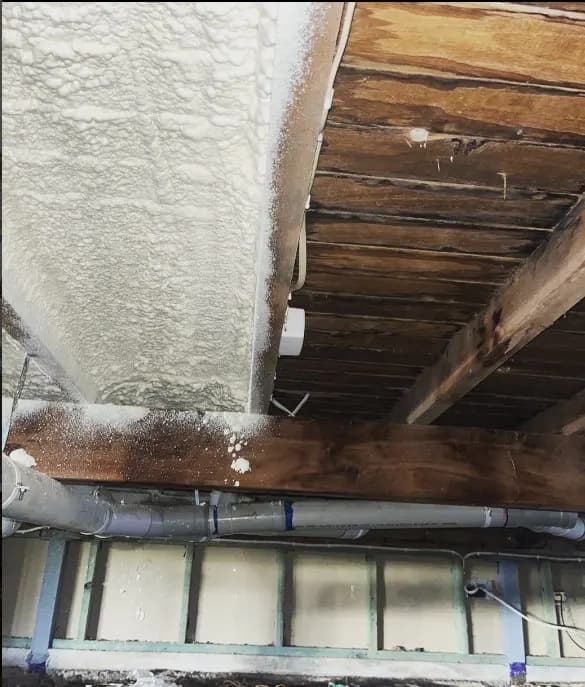
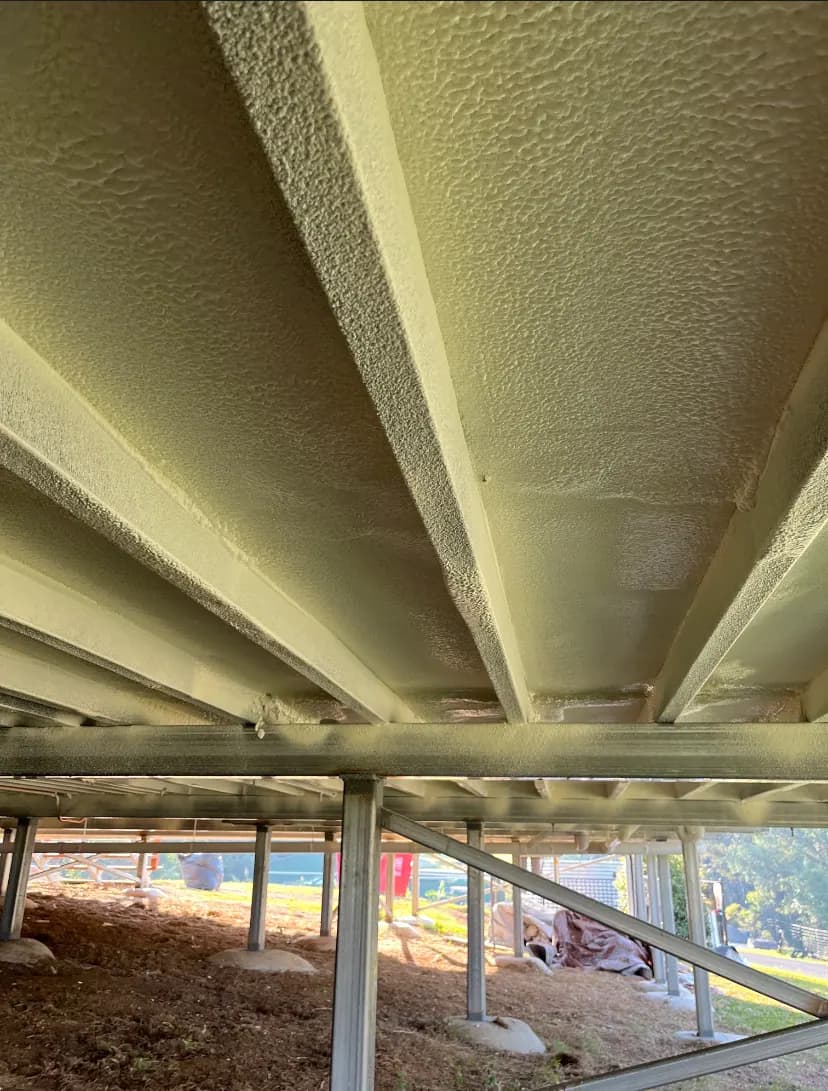
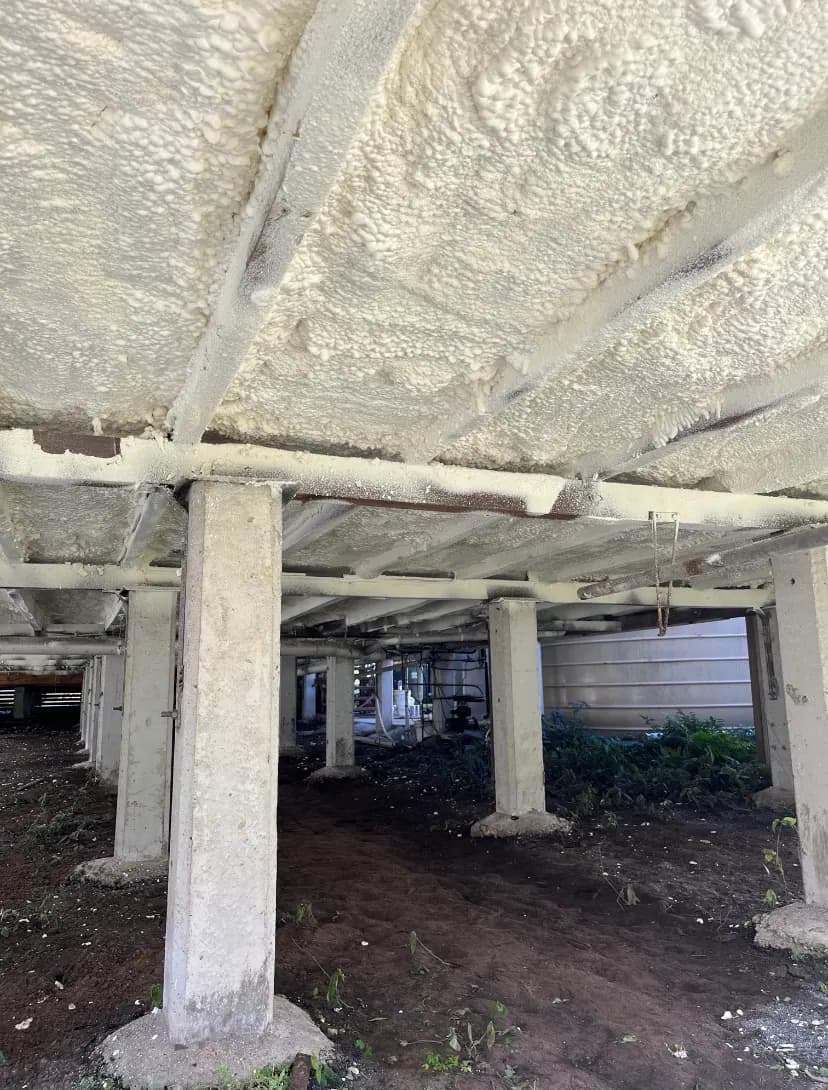
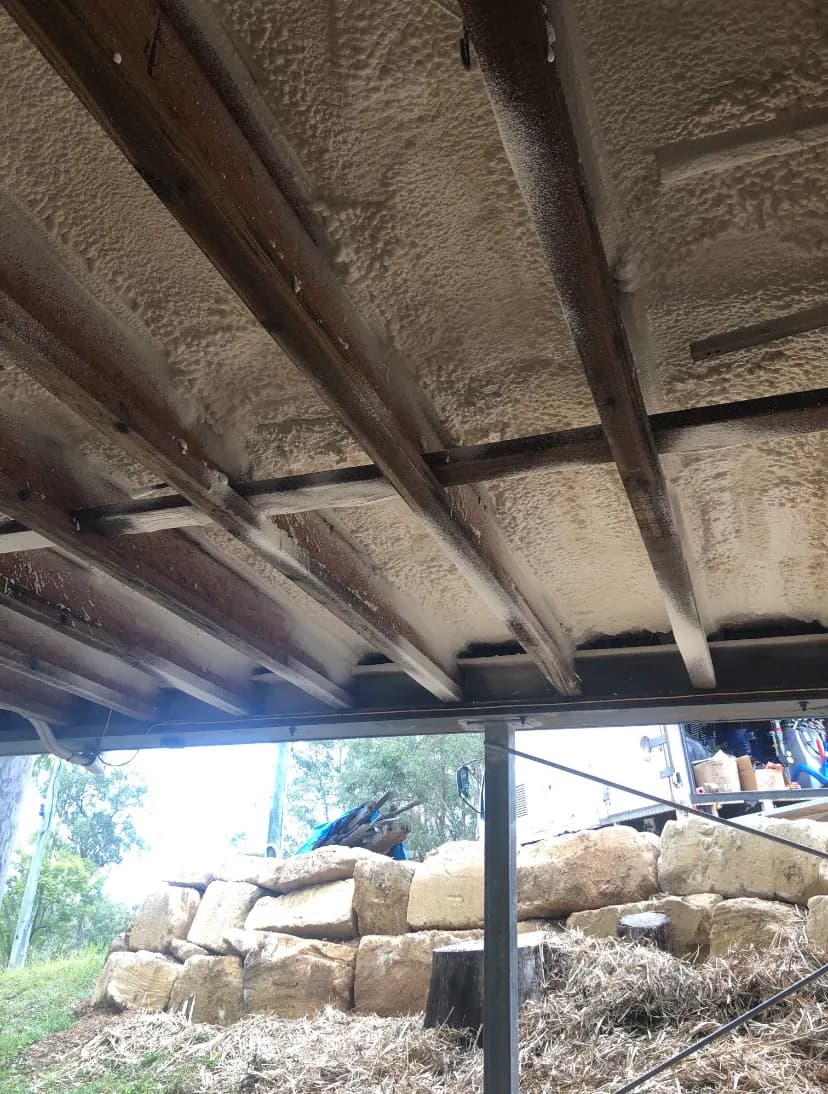
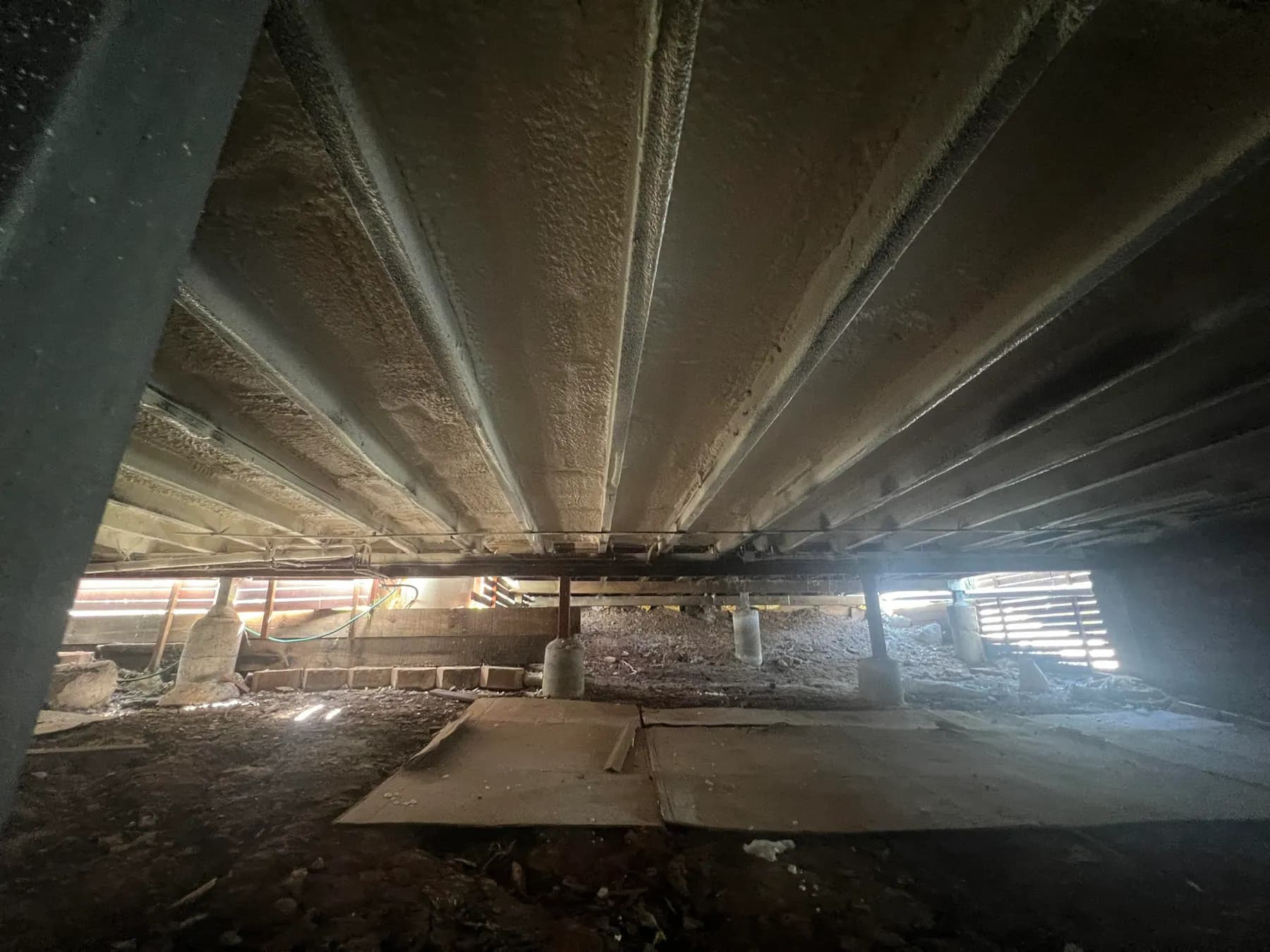
Closed-cell spray foam is our top choice for underfloor insulation because it is applied directly to the underside of the floor and bonds to the structure. That gives:
- Comprehensive airtightness.
- Excellent heat retention.
- Effective moisture management.
- Sound dampening.
- Added structural reinforcement.
How spray foam is installed under the floor
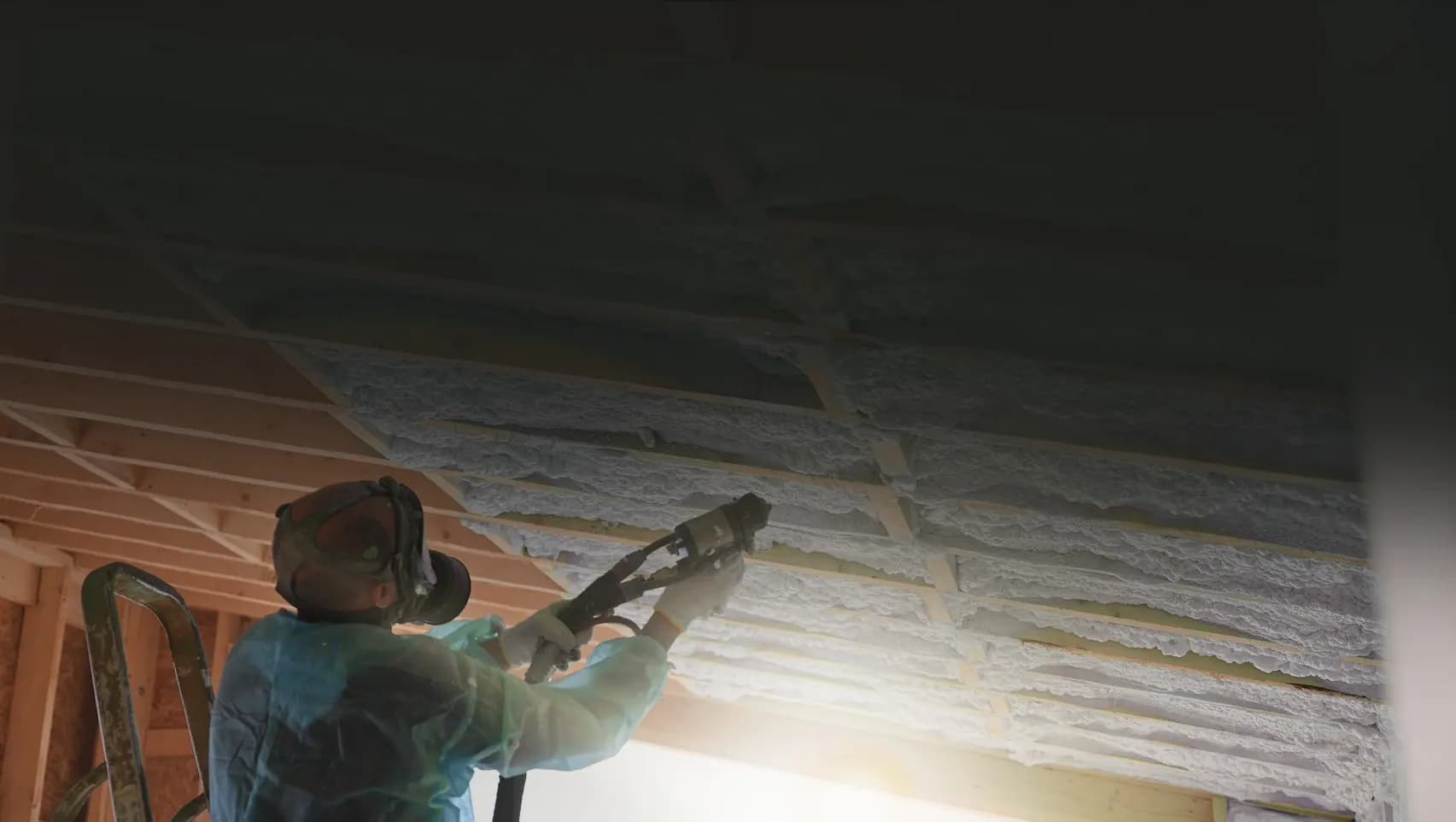
Trained professionals spray the foam directly onto the underside of the floorboards and between the joists, where it expands to fill air pockets and seal against air and moisture. It must be sprayed evenly and at the correct thickness for a consistent finish.
What to consider with spray foam
- Cost: spray foam is about twice the price of batts, so it is the premium, long-term option.
- Professional installation: the equipment and materials require skilled, experienced installers, and that is built into the cost.
- Floorboard repairs: because the foam bonds to the underside of the floor, replace any damaged boards before it is applied.
Knauf Earthwool FloorShield underfloor batts
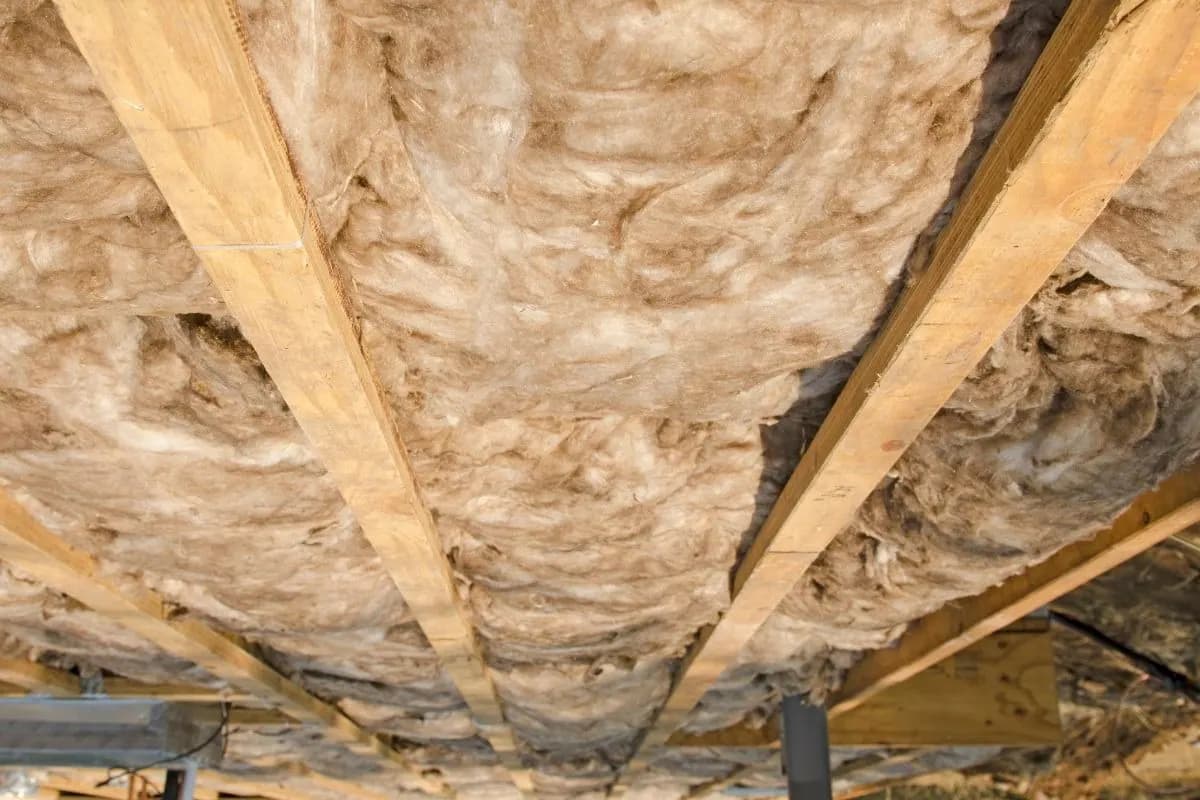
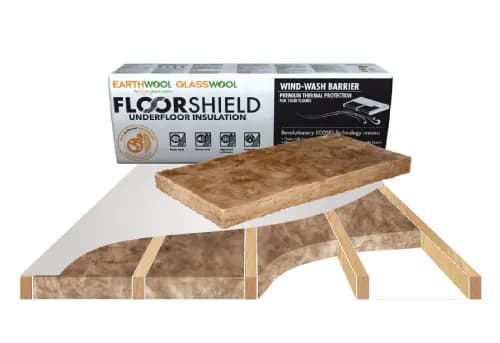
The Earthwool® FloorShield underfloor batt is made from resilient, silicone-coated glasswool with an ECOSE® glass veil facing that acts as a barrier against wind-wash, protecting the insulation from air moving beneath the floor. It is the market-leading batt for underfloor insulation and comes in a standard range of R-values.
- High thermal performance.
- Sound absorption for a quieter home.
- Made from recycled glass and sand.
- Non-combustible to AS1530.1.
How underfloor batts are installed
The batts are cut to size and fitted snugly between the floor joists, then secured so they cannot fall or shift over time. A tight fit matters, because gaps reduce the thermal performance of the floor.
What to consider with batts
- Installation time: batts must be cut and fitted between each joist.
- Gaps: poor installation leaves gaps that reduce effectiveness.
- Settling: over time batts can shift or sag if not properly secured.
Choosing between batts and spray foam
Both options give strong thermal resistance. Batts are the more economical choice for an accessible, dry subfloor with standard joists. Spray foam costs more but adds air sealing and moisture control, which suits draughty floors and homes with damp or vermin issues. Your assessor will look at the crawl space, the floor structure and your budget before recommending one.
Book underfloor insulation in Perth
Insulation Extract has retrofitted more than 45,000 Australian homes since 2014 and keeps up to date with the latest underfloor products. With insulation under the floor, you get a warmer home in winter, a cooler home in summer and less strain on your heating and cooling all year. Call (08) 9302 2699 to book a free underfloor insulation assessment in Perth.
Frequently Asked Questions
Does my Perth home suit underfloor insulation?
What types of underfloor insulation do you install?
Is spray foam or batts better under the floor?
What happens if my floor is not insulated?
Should I fix my floorboards before spray foam is applied?
How does underfloor insulation lower energy bills?
Our Perth services
Helpful resources
- Insulation Cost Guide: What Affects Your Quote | Insulation Extract
- Earthwool vs Bradford vs Pink Batts | Insulation Extract
- Batts vs Blow-in vs Spray Foam | Insulation Extract
- Remove Old Insulation or Top It Up? | Insulation Extract
- Staying Home During Insulation Removal | Insulation Extract
- Understand Insulation R-Value In Perth | Insulation Extract
- How Do I Know If My Insulation Has Asbestos?
- Polystyrene Beads for Insulation In My Home?
- What are the requirements for insulation in WA?
- Why Is My Old Insulation Turning Yellow?
- Government Insulation Finance | Insulation Extract