Spray Foam Insulation Perth
Insulation Extract installs polyurethane spray foam insulation in Perth homes, sealing and insulating underfloors, walls, ceilings and skillion roofs in a single application. Closed-cell foam reaches R1.0 at around 20mm thick, making it ideal where space is tight. Book a free on-site assessment.

Extraction & Batts
Get your free quote
This secure form sends your enquiry to our technical team, and we'll be in contact with you shortly.
Updated
Polyurethane spray foam insulation specialists in Perth
More Perth homeowners are choosing spray foam insulation, and for good reason. It insulates and air-seals at the same time, and it reaches places where batts and boards cannot go. Insulation Extract is one of WA's only certified spray foam specialists, and our crews have completed thousands of spray foam projects.
Spray foam is particularly useful in Perth homes with features that are hard to insulate any other way: skillion and flat roofs with little or no roof space, suspended timber floors with draughty boards, renovations and extensions where wall frames are open, and older homes with irregular framing.
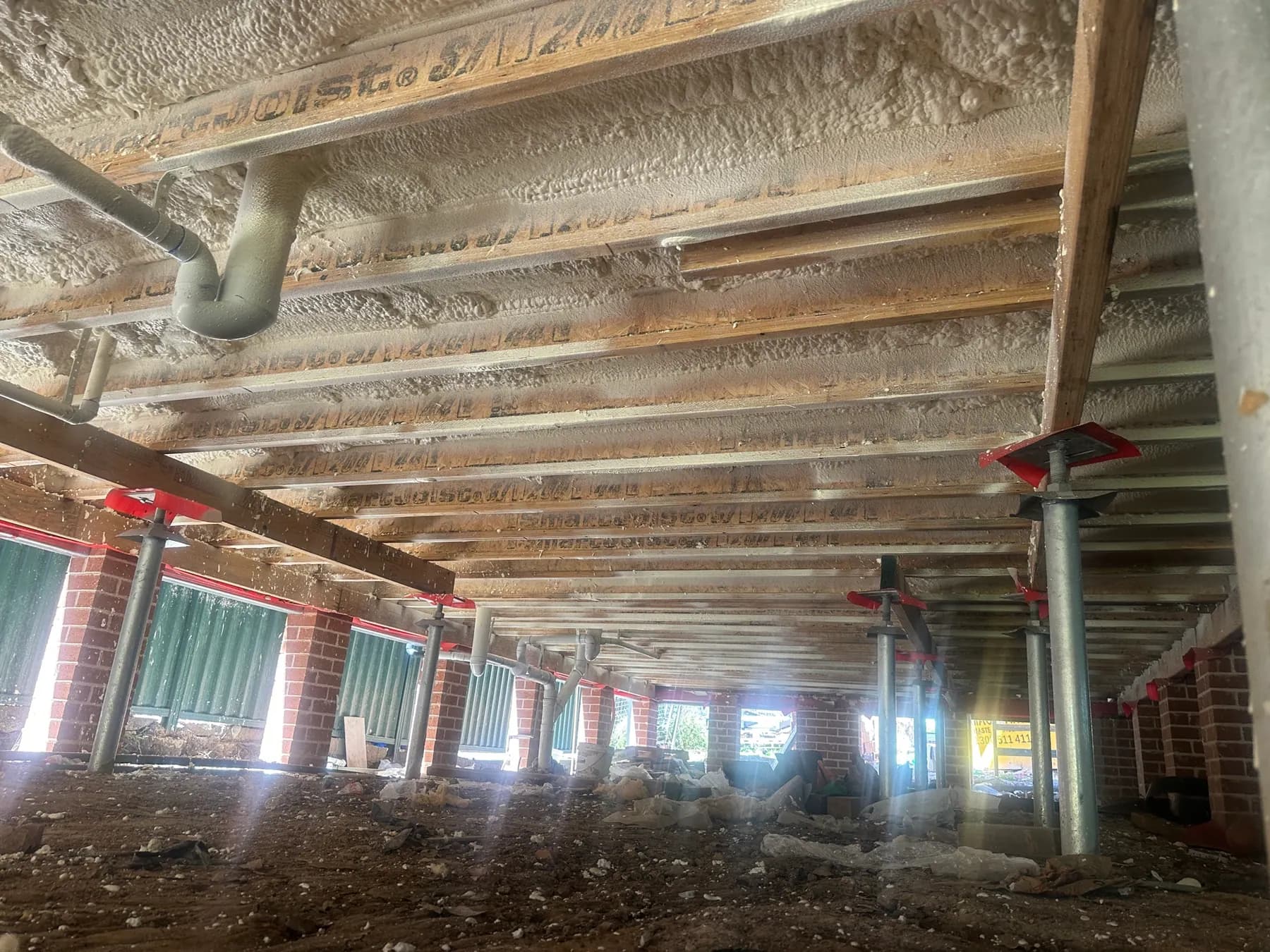
What is spray foam insulation?
Spray foam is an insulation material sprayed onto surfaces as a liquid. It then expands and hardens into a dense, airtight foam that bonds to the structure. Closed-cell foam provides an R-value of about R1.0 per 20mm of thickness, which makes it one of the most efficient insulation materials for the building envelope.
Its air sealing also makes it an effective moisture barrier, helping prevent mould and mildew. Because it reduces air leakage as well as heat transfer, closed-cell spray foam can significantly lower energy use and heating and cooling costs, and with them your carbon footprint.
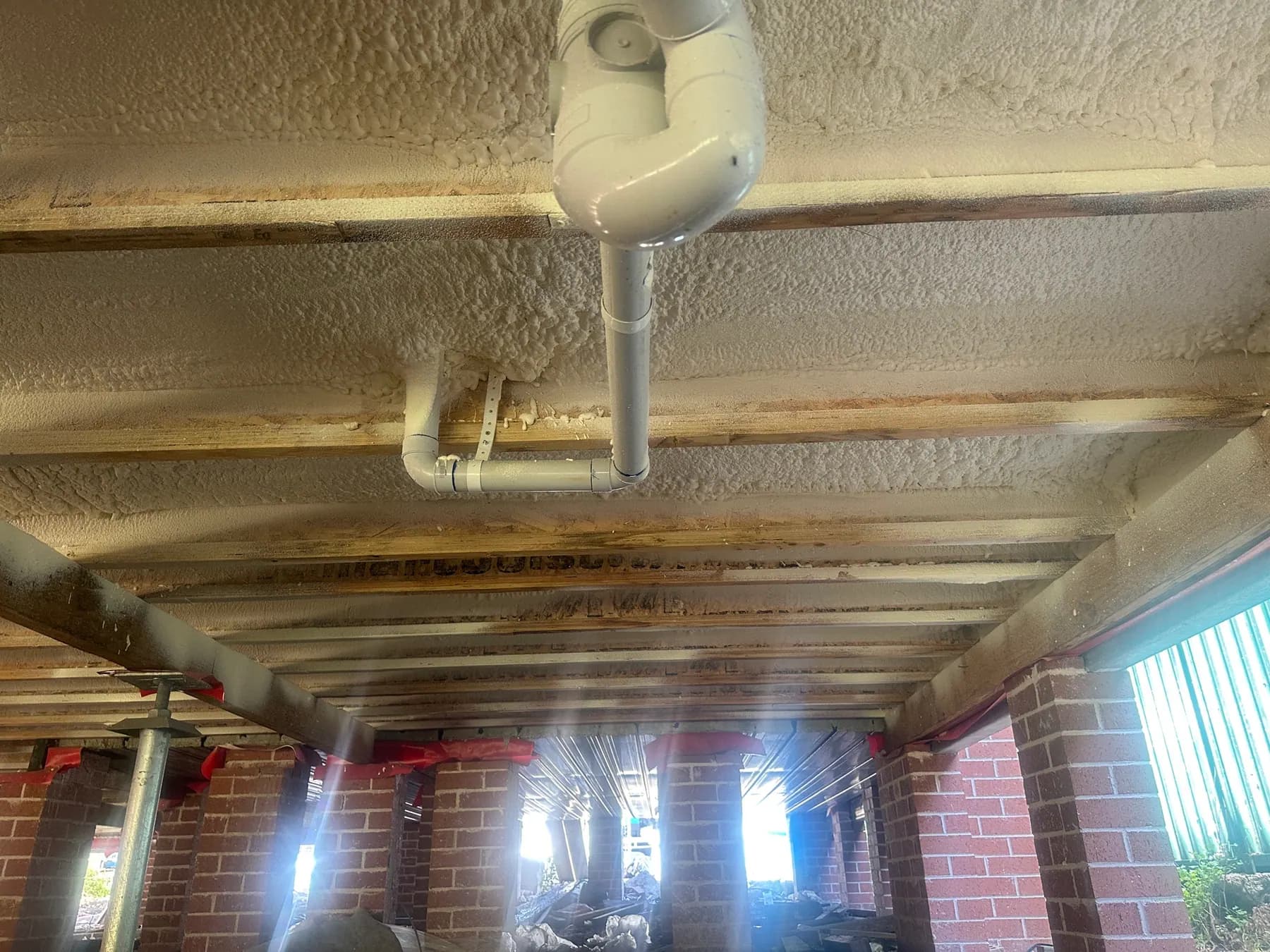
Why spray foam suits Perth's climate
Perth has hot, dry summers and cool, wet winters, and it sits in climate zone 5 under the National Construction Code. A home here needs to keep out summer heat on 40-degree days and hold its warmth through winter nights. Spray foam does both, because it stops heat moving through the structure and stops air leaking through the gaps around it.
Our winter rain can also bring moisture into subfloors and wall cavities. Closed-cell foam has very low water vapour permeability, which helps keep damp out of the building fabric.
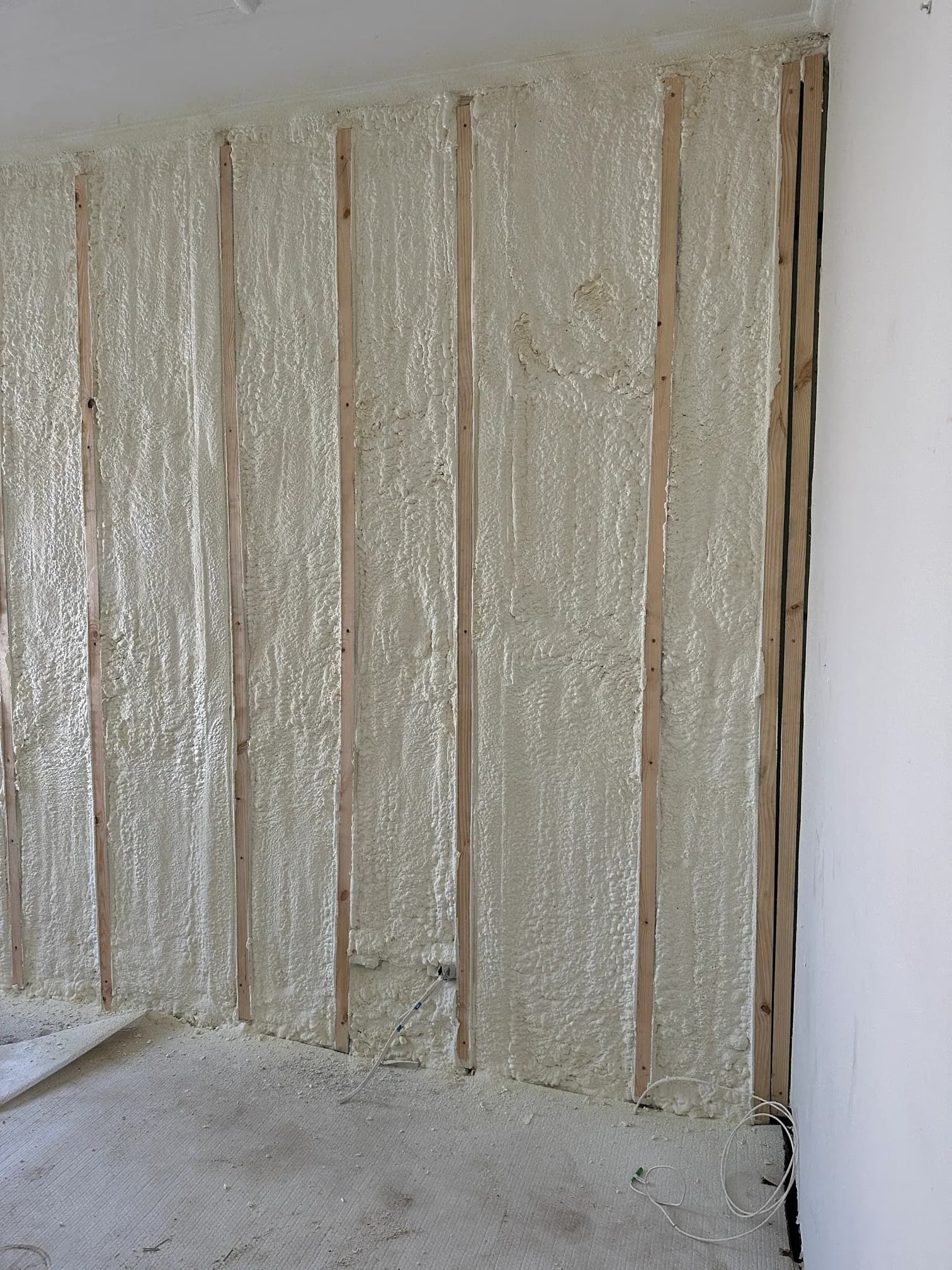
Benefits of spray foam insulation
Energy efficiency
By creating a tight seal, spray foam reduces the load on your air conditioner and heater, which leads to real energy savings.
Durability
Unlike some traditional insulation, spray foam does not sag or settle over time. Once it is in place it keeps performing year after year.
Soundproofing
Spray foam acts as a barrier to noise, helping reduce sound from traffic, neighbours and other rooms.
Moisture and mould resistance
Its air-sealing properties help keep moisture out and limit mould growth, which is particularly valuable under floors and in older walls.
Open-cell vs closed-cell spray foam
Both types insulate well, but they behave differently. Open-cell foam is softer and more flexible, while closed-cell foam is denser and more rigid. Think of the difference between a sponge and a solid rubber ball.
Closed-cell foam
about 20mm thick for an R1.0 rating. It has very low water permeability and blocks vapour transfer, so it suits underfloors, external walls and anywhere moisture is a concern.
Open-cell foam
about 45 to 50mm thick for an R1.0 rating. It is more commonly used in ceilings and internal walls where moisture is not a concern.
Your assessor will recommend the right foam type and thickness for each part of your home, based on access, moisture and the R-value you want to reach.
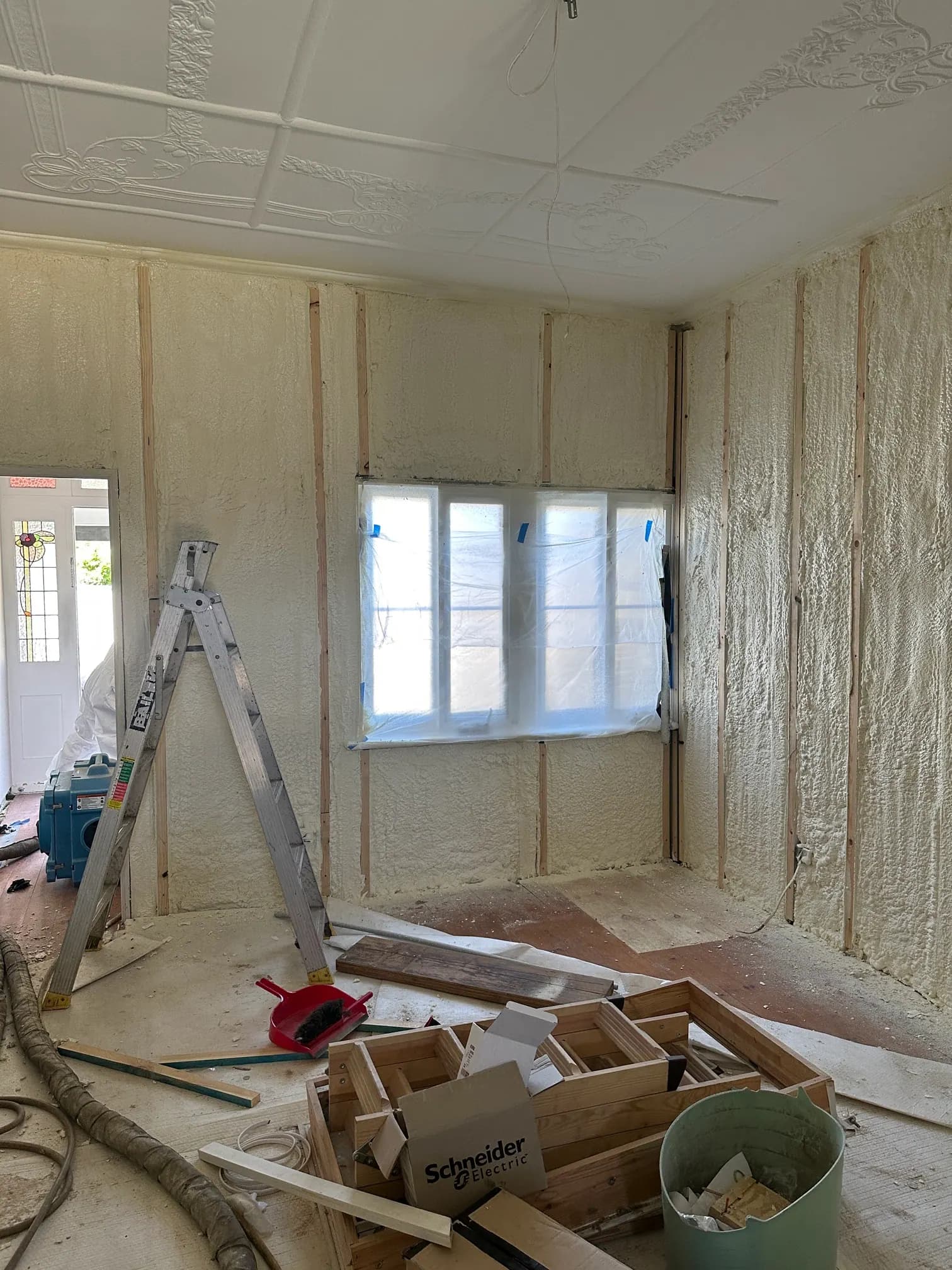
Where spray foam can be applied in your home
Spray foam is versatile. We apply it in:
- Underfloor areas, sprayed onto the underside of suspended timber floors.
- External walls and internal walls.
- Ceilings and mid-floor ceilings.
- Skillion roofs and other roofs with little or no roof space.
Skillion and flat roofs
Skillion roofs, common on Perth extensions and mid-century homes, often have only a narrow gap between the ceiling and the roof sheeting. There is no room to lay thick batts, but a thin layer of closed-cell foam can deliver useful thermal resistance and seal the gaps at the same time.
Suspended timber floors
Under a raised timber floor, spray foam seals the gaps between boards that let in cold draughts, adds a thermal break and helps keep damp out. It is our top choice for underfloor insulation where the budget allows.
For underfloor work, the foam bonds directly to the underside of the floorboards, so any damaged boards should be replaced before it is applied.
Our spray foam installation process
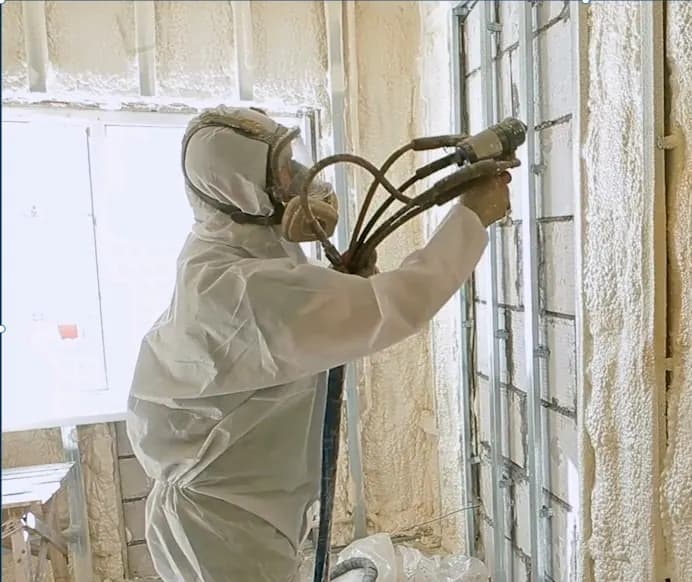
Spray foam must be installed by trained professionals using specialised equipment. After a free on-site assessment, the crew prepares and protects the area, then sprays the foam evenly to the specified thickness so it expands to fill gaps and forms a continuous insulating layer. Once it has cured, excess foam is trimmed where needed and the site is cleaned up.
Choosing a spray foam insulation contractor in Perth
Your home deserves the right installer. Before you choose, check:
Experience
look for a contractor with a proven record of spray foam work, not a newcomer learning on your home.
Licensing and insurance
make sure the contractor is properly licensed and insured.
Reviews and testimonials
Google reviews and recommendations from past customers are the best guide to how a contractor performs.
Insulation Extract has retrofitted more than 45,000 Australian homes since 2014 and holds ISO 9001, 45001 and 14001 certified systems. Call (08) 9302 2699 to book a free spray foam insulation assessment anywhere in Perth.
Frequently Asked Questions
How is spray foam different from traditional insulation?
Why is spray foam popular in Perth?
What is the difference between open-cell and closed-cell spray foam?
Where can spray foam insulation be used?
Does spray foam help with moisture and mould?
What should I look for in a spray foam contractor?
Our Perth services
Helpful resources
- Insulation Cost Guide: What Affects Your Quote | Insulation Extract
- Earthwool vs Bradford vs Pink Batts | Insulation Extract
- Batts vs Blow-in vs Spray Foam | Insulation Extract
- Remove Old Insulation or Top It Up? | Insulation Extract
- Staying Home During Insulation Removal | Insulation Extract
- Understand Insulation R-Value In Perth | Insulation Extract
- How Do I Know If My Insulation Has Asbestos?
- Polystyrene Beads for Insulation In My Home?
- What are the requirements for insulation in WA?
- Why Is My Old Insulation Turning Yellow?
- Government Insulation Finance | Insulation Extract