Batts vs Blow-in vs Spray Foam Insulation
Batts suit most ceilings with room to work in. Blow-in glasswool suits low, cramped or broken-up roof spaces and is also used to fill double-brick cavity walls. Spray foam suits skillion and flat roofs, suspended timber floors and open wall frames, where it insulates and air-seals in one application. Insulation Extract installs all three and recommends one at the free assessment.

Extraction & Batts
Updated
Batts
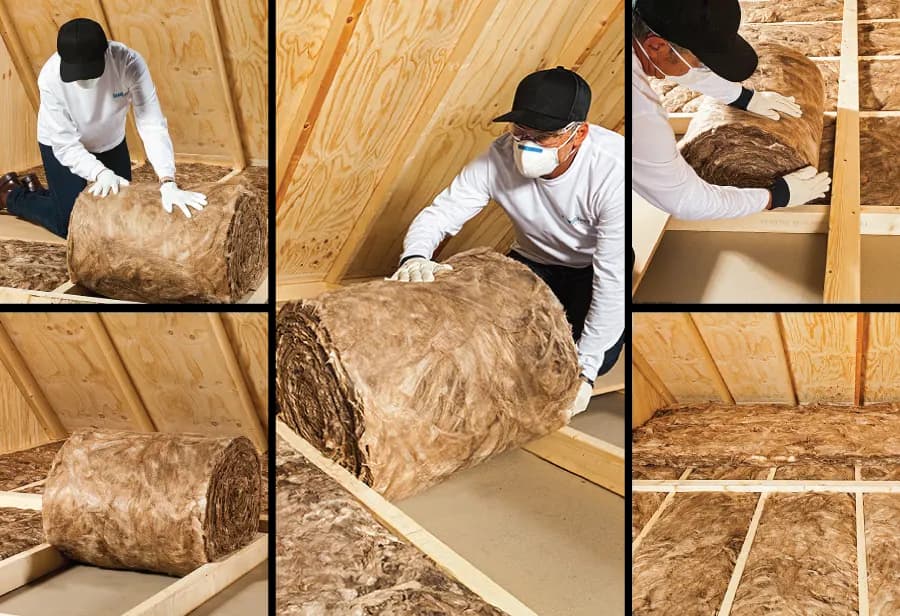
Batts are pre-cut blankets of insulation laid between the ceiling joists. They are the usual choice for a roof space with enough height to move around in, and they come in the widest range of R-values. We install Knauf Earthwool® glasswool batts.
- Best for: open ceilings with good access, and walls and floors during renovations.
- Watch for: gaps and squashing, which cut performance, and clearances around downlights and flues.
Blow-in glasswool
Modern blow-in insulation is loose glasswool blown through a hose into the roof space. It forms a seamless, even layer and reaches tight and awkward spots where batts are hard to lay. It is not the same as old cellulose loose-fill, often called "the fluff", which was made from shredded paper and is one of the most common things we remove.
- Best for: low-pitched, cramped or broken-up roof spaces.
- In walls: Knauf SUPAFIL® Carbon Plus glasswool is injected into the empty gap in double-brick cavity walls, without renovation.
Spray foam
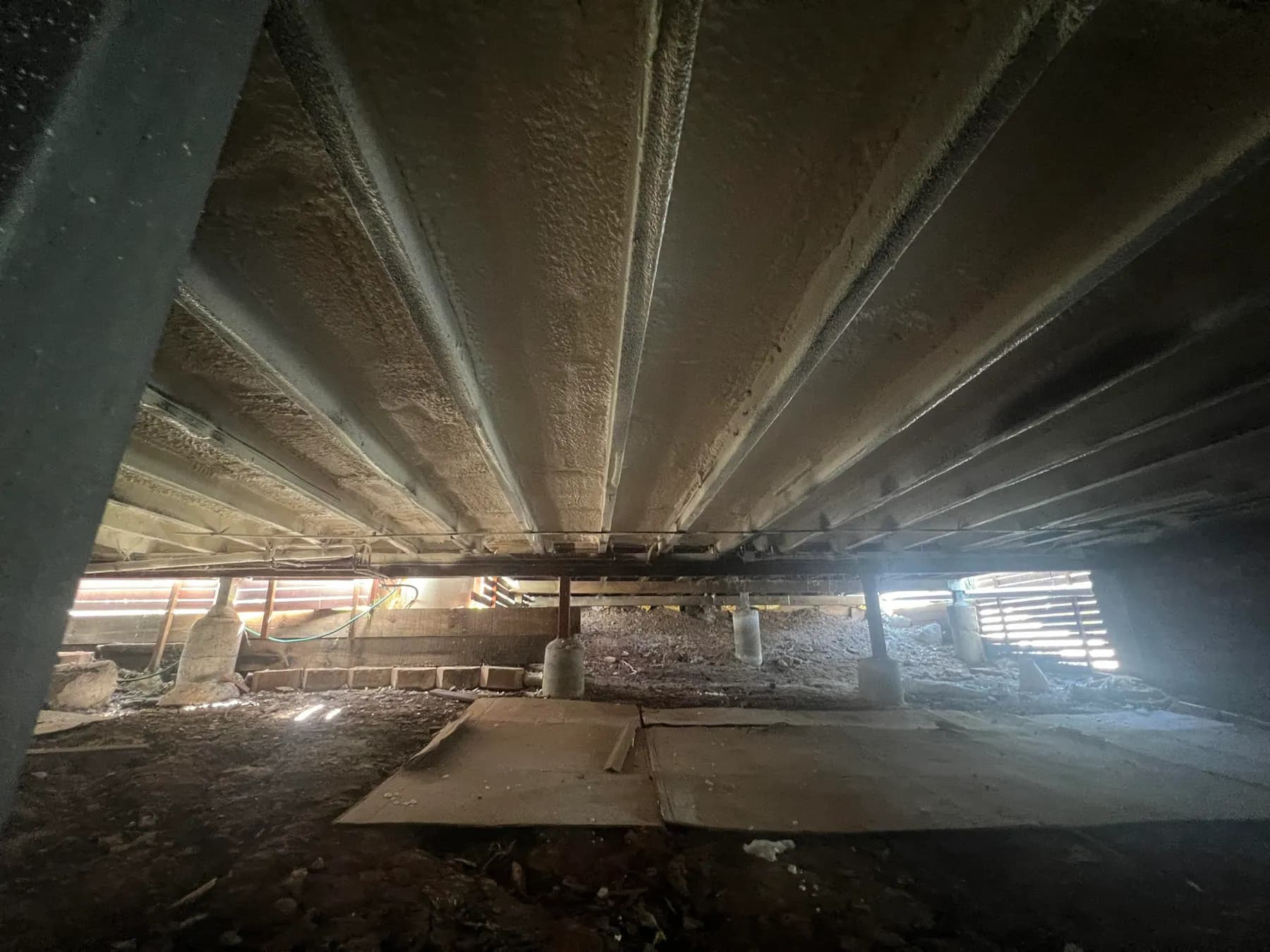
Spray foam is sprayed on as a liquid, then expands and hardens into a dense, airtight layer that bonds to the structure. Because it air-seals as well as insulates, it suits places with little or no roof space and parts of the house that let in draughts.
- Closed-cell foam: about 20mm thick for R1.0. It has very low water vapour permeability, so it suits underfloors, external walls and anywhere moisture is a concern.
- Open-cell foam: about 45 to 50mm thick for R1.0. It is softer and is used more in ceilings and internal walls.
- Best for: skillion and flat roofs, suspended timber floors, renovations with open wall frames.
How the prices compare
Our typical price for new batts is $15–$30 per m² installed. Blow-in and spray foam are quoted after the assessment, because the price depends on the area, the access and the thickness needed to reach your R-value.
Frequently Asked Questions
Is blow-in insulation better than batts?
Is spray foam insulation worth it?
Can you insulate double brick walls?
What is the best insulation for a skillion roof?
Related services
Helpful resources
- Insulation Cost Guide: Prices per m² | Insulation Extract
- Earthwool vs Bradford vs Pink Batts | Insulation Extract
- Batts vs Blow-in vs Spray Foam | Insulation Extract
- Remove Old Insulation or Top It Up? | Insulation Extract
- Staying Home During Insulation Removal | Insulation Extract
- Understand Insulation R-Value In Perth | Insulation Extract
- How Do I Know If My Insulation Has Asbestos?
- Polystyrene Beads for Insulation In My Home?
- What are the requirements for insulation in WA?
- Why Is My Old Insulation Turning Yellow?
- Government Insulation Finance | Insulation Extract